 +86-0510-86219899


 English
 English
 русский
 Español


Content
- 1 LED Lighting for Bridges: Start With Zone-Based Objectives
- 2 Specify Salt Spray, Vibration and Impact Resistance for Bridge Luminaires
- 3 Glare Limits and Beam Geometry on Bridge Decks
- 4 Power, Controls and Maintenance-Led Design for Bridge Luminaires
- 5 Lifecycle Cost Comparison for LED Lighting for Bridges
- 6 FAQ: LED Lighting for Bridges
A suspension bridge pylon standing 180 m above the water line is one of the harshest mounting positions in public lighting. Salt-laden wind, traffic-induced vibration, and a 40°C seasonal temperature swing will destroy a commercial-grade fixture in a single season if sealing and impact class were not specified. That is why LED lighting for bridges has to be defined as an engineering package, not a fixture selection.
The manufacturing team behind Jiangsu Dingrui Lighting Technology Co., Ltd., a Chinese outdoor lighting producer with more than 15 years of experience and exports to over 35 countries, starts every bridge project with four questions: what each zone is for, what the environment will do to the fixture, how light is aimed without glare, and how a maintenance crew will reach the luminaire afterward.
LED Lighting for Bridges: Start With Zone-Based Objectives
A bridge is never a single lighting task. Split the structure into vehicle deck, pedestrian path, architectural surfaces and navigation markers, and set a photometric target for each before comparing luminaires.
Vehicle Deck Lighting
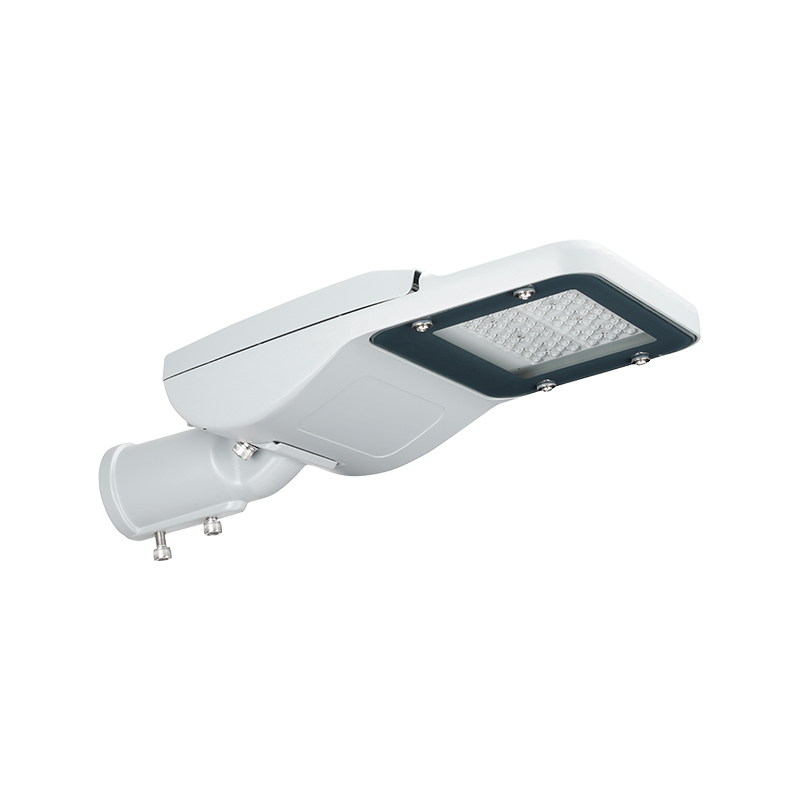
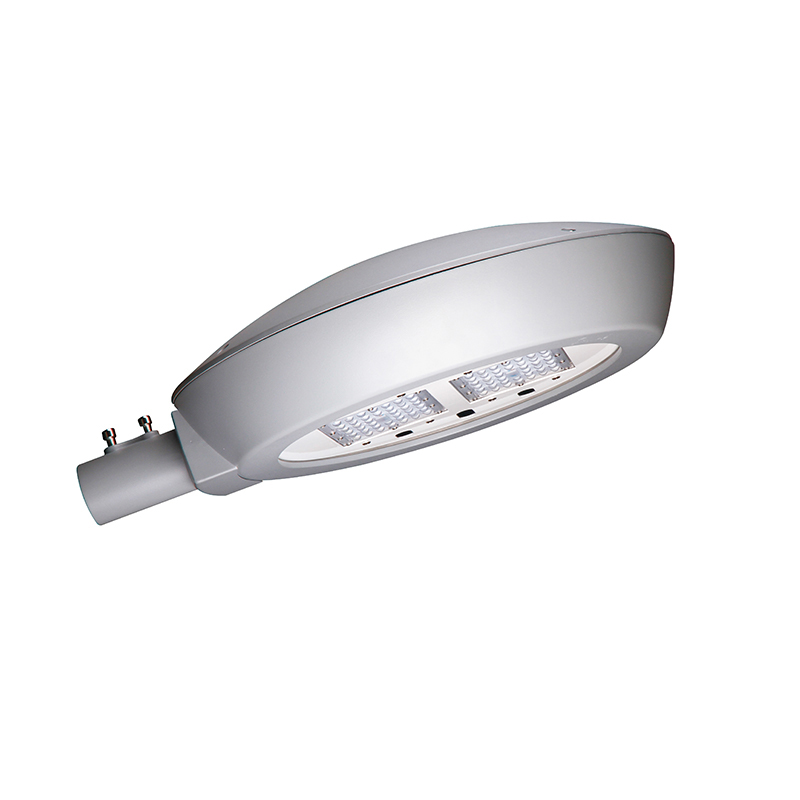
The deck normally runs at EN 13201 M-class levels: 1.0-2.0 cd/m² maintained luminance for M2/M3, with luminaires mounted at 8-12 m and spaced 25-30 m apart. Use full-cutoff road optics with an asymmetric distribution aimed along the driving line. The Atlantic series street light, built for IP66 and available from 100 W to 300 W, fits this duty when the structure also carries heavy traffic.
Pedestrian and Cycle Paths
Walkways need P-class values: 10-15 lux maintained illuminance, a 3000 K upper limit on correlated color temperature, and UGR below 25 for night vision comfort. A 5-6 m mounting height keeps the light on the path instead of spilling onto the water, where it creates moving reflections.
Cables, pylons and the deck underside are accent zones. Use narrow asymmetric floods for grazing cable planes, broad floodlights for pier faces, and keep accent CCT between 2200 K and 3000 K to preserve a landmark effect. Marine navigation markers remain a separate controlled system.
- Goal: safe driving at traffic speed
- Typical fixture: IP66 road street light
- Distribution: asymmetric full-cutoff
- CCT range: 3000-4000 K
- Goal: silhouette and landmark identity
- Typical fixture: IP66 flood light
- Distribution: narrow asymmetric beam
- CCT range: 2200-3000 K
 Atlantic Series LED Street Light with Modular IP66 DesignThis modular street light offers flexible wattage options and corrosion-resistant construction, making it a dependable choice for bridge decks exposed to salt spray and vibration.View Product →
Specify Salt Spray, Vibration and Impact Resistance for Bridge Luminaires
Corrosion, not LED depreciation, is the first failure mode on bridges. Salt spray attacks gaskets and fasteners, traffic vibration loosens brackets, and wheel-thrown debris cracks an unprotected lens, so the securing choice is an IP66 housing with an IK08 or IK10 impact rating.
Corrosion Protection
For coastal or industrial crossings, require a high-pressure die-cast aluminum body with a polyester powder coat, stainless steel external fasteners, and a sealed driver compartment that meets the C5-M corrosion classification. Luminaires that pass a 720-hour salt spray test typically stay on the structure beyond a 10-year service life. For structural accents, the Guardian flood series (60 W-400 W, IP66, IK08) is a common choice on coastal crossings.
Vibration and Impact
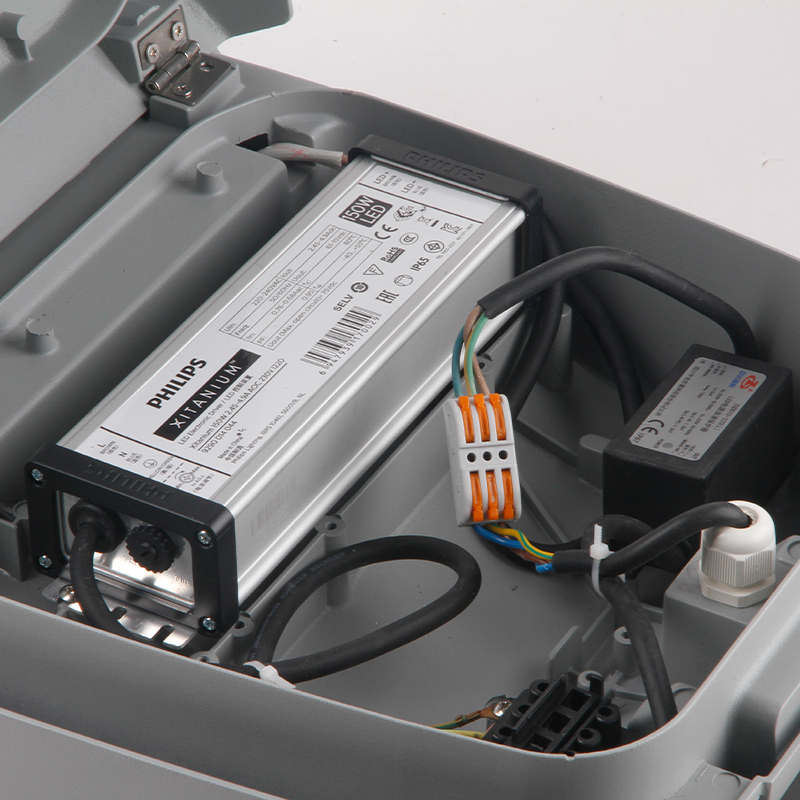
Pylons and towers transmit continuous vibration into the mounting arm. Use IK08 for floodlights mounted above 4 m, and IK10 for deck-level fixtures that can be hit by road debris or maintenance equipment. A modular engine housing reduces the number of parts that can work loose in service and shortens replacement time when a driver fails.
- IP66 gasket-sealed driver compartment
- IK10 for deck-level luminaires, IK08 for elevated floods
- C5-M compatible body with stainless hardware
- Wet-location sealed cable glands
- CE, RoHS and ISO 9001 compliance in production
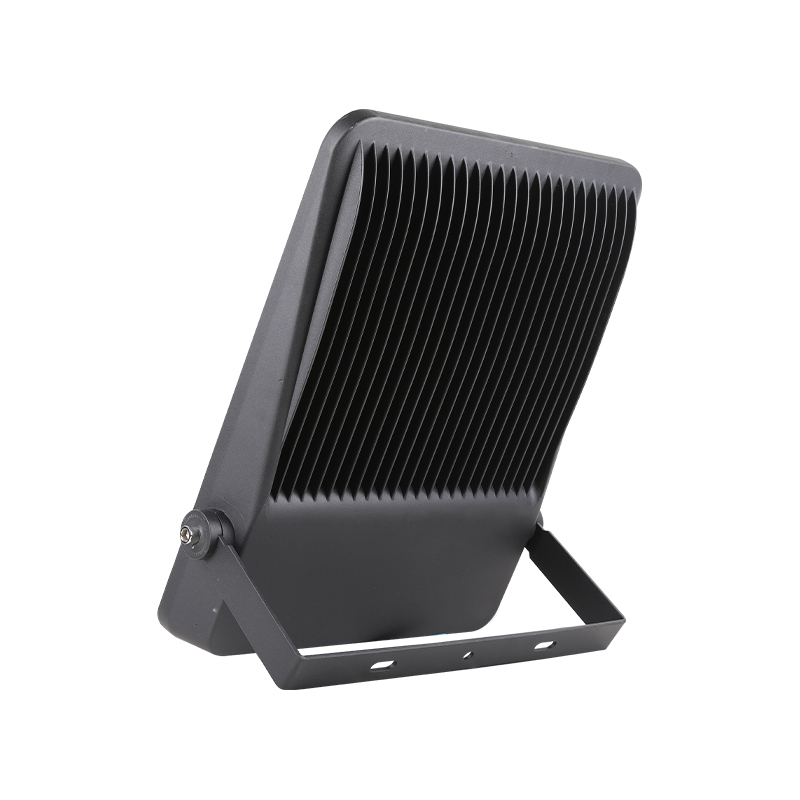 Guardian Series LED Flood Light with Cut-Off OpticsDesigned for glare control with fully cut-off optics and G6 classification, this flood light suits bridge accent lighting where visibility and night scenery must be protected.View Product →
Glare Limits and Beam Geometry on Bridge Decks
Glare is the first complaint after a bridge lighting switch-on. Light emitted more than 60 deg above the vertical creates disability glare for drivers and destroys the night view for pedestrians, so specifiers should choose fully cut-off optics with a G6 classification.
Aiming and Mounting Height
Keep the main beam parallel to the bridge axis. For walkways, place the fixture at least four times its horizontal distance from the path edge; for vehicle decks, adjust asymmetric road optics so the peak candela stays on the driving lane, never on the railing.
Cable and Pylon Beam Geometry
Accent zones work with narrow asymmetric beams of 8-15 deg vertical and 60-90 deg horizontal, aimed at the cable plane from 3-6 m away. Uplighting a pylon from two sides keeps the luminance ratio against the night sky under 10:1 and avoids the flat black silhouette of one-sided lighting.
Power, Controls and Maintenance-Led Design for Bridge Luminaires
Design for replacement before you design for illumination. The cost of bridge lighting maintenance is dominated by access and traffic control, not by the lamp itself, so every fixture choice should reduce the number of site visits and the time a crew spends inside a traffic lane.
Surge Protection and Cable Runs
A bridge is a lightning-attracting structure. Install at least a 10 kV surge protector at or inside each luminaire; without it, one indirect strike can take out an entire segment of drivers. Keep control cable runs below 100 m and calculate the voltage drop for 0-10 V or DALI control lines separately from the mains feed.
Smart Controls on an Exposed Deck
Dimming to 70% outside traffic peaks, astronomical scheduling and remote status monitoring cut energy use by an additional 15-25%. The most reliable controls on a salt-exposed deck are wired DALI or 0-10 V with a central controller; radio mesh links struggle with metal structures and are harder to certify.
Modular Fixture Layout
A luminaire with a hinged driver tray, tool-less lens replacement and a standard mounting arm can be serviced in under 30 minutes from an access platform. The Nova flood series was designed this way: the optical block can be swapped without touching the wiring gland, which is critical for a marine-grade connection.
| Component | Field check | Action threshold |
| IP gasket | Visual seal line inspection | Replace if cracked or deformed |
| Lens | Check yellowing and transmittance | Replace when transmittance drops below 90% |
| Driver | Measure case temperature | Intervene above 85°C |
| Surge protector | Read status indicator | Replace after lightning event |
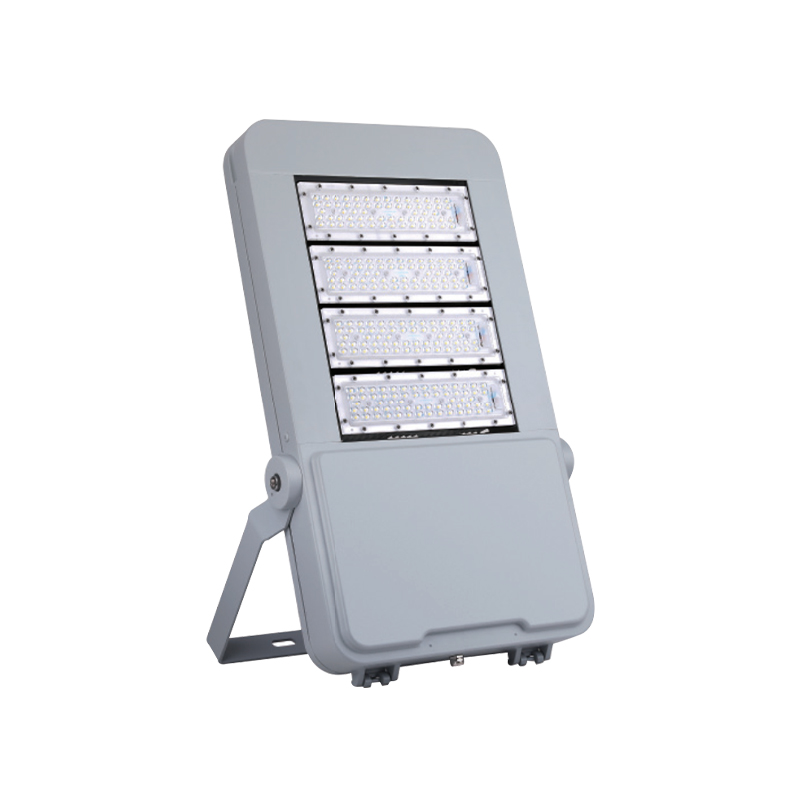 Nova Flood Modular LED Flood Light with Tool-Free MaintenanceIts modular LED engine and tool-free gear compartment simplify on-site servicing, reducing downtime during bridge maintenance while providing adaptable light distribution.View Product →
Lifecycle Cost Comparison for LED Lighting for Bridges
Digital LED sources running at 160 lm/W system efficacy and a 100,000 h L80 rating cut energy demand by roughly 60% and relamping visits by more than half compared with HPS. The decision number is the 10-year cost per luminaire, not the purchase price.
| Metric | 250 W HPS | 100 W LED |
| System efficacy | 90 lm/W | 160 lm/W |
| Rated life | 24,000 h | 100,000 h |
| Relamps in 10 years | 3-4 | 0-1 |
| Energy per year | 1,004 kWh | 402 kWh |
| 10-yr energy cost at $0.15/kWh | $1,505 | $602 |
At 11 h per day, the energy delta alone pays for the incremental LED hardware cost in two to three years, while avoided access crane visits cover the rest. Select optics for the actual bridge width; high candela peaks are the most common reason an LED retrofit disappoints even when the measured lux meets specification.
FAQ: LED Lighting for Bridges
What IP and IK ratings should bridge LED luminaires have?
Specify IP66 as the minimum for any housing that contains a driver, and IK10 for fixtures mounted at deck level. Elevated floodlights are acceptable at IK08 when the mounting height is above 4 m and road debris cannot reach them.
How do you reduce glare for pedestrians on an illuminated bridge?
Use full-cutoff G6 optics, keep CCT at 3000 K or lower, mount the fixture at least four times its setback from the path edge, and aim the main beam along the bridge axis. Maintained illuminance of 10-15 lux on the walkway is enough when the surroundings are dark; more light produces uncomfortable contrast.
Can standard LED street lights be used for bridge lighting?
Yes for the vehicle deck, provided the housing is IP66, the impact class is IK10, the optic is full-cutoff and the driver compartment is sealed against salt spray. Cable and pylon accent zones still need flood luminaires with narrow asymmetric optics, which is why most bridge projects combine street lights and flood lights.
What maintenance interval is realistic for LED bridge lighting?
With a 100,000 h L80 lumen maintenance rating, plan visual inspection and lens cleaning every two to three years and driver replacement after 60,000-80,000 h depending on ambient temperature. On coastal bridges, inspect glands, brackets and fasteners for corrosion at least once per year.


 Add.: Jiepai Town, Danyang City, Jiangsu Province, China.
 Tel: +86-0510-86219899
 Phone: +86-18601236320
 Email:
