 +86-0510-86219899


 English
 English
 русский
 Español


When a city replaces 250 W high-pressure sodium lamps with LED road lighting, the real difference is rarely the lamp itself; it is the specification behind it. The first question a buyer should ask is not “how much does the fixture cost” but “how many lumens does it deliver per watt, how well is it sealed, and how will the maintenance team handle a failed module.” LED road lighting is an integrated LED fixture designed for continuous outdoor operation, and those three answers decide payback over the next decade. Jiangsu Dingrui Lighting Technology Co., Ltd., a China-based outdoor lighting manufacturer with 15 years of experience and exports to more than 35 countries, builds street light series from 30 W to 400 W around these same questions.
Read Lumens per Watt Before You Compare LED Road Lighting Prices
Efficacy, measured in lumens per watt, is the first specification that determines whether an LED road lighting project earns back its capital cost.
A fixture rated at 120 lm/W and a fixture rated at 180 lm/W can look identical from the outside. The difference appears in the LED board and optic. To deliver 15,000 lm, a 120 lm/W design needs 125 W, while an 180 lm/W design needs about 83 W. Multiply that 42 W gap by 10 operating hours per day and 365 days per year, and one pole consumes roughly 153 kWh less every year. A 1,000-fixture project avoids about 153,000 kWh annually.
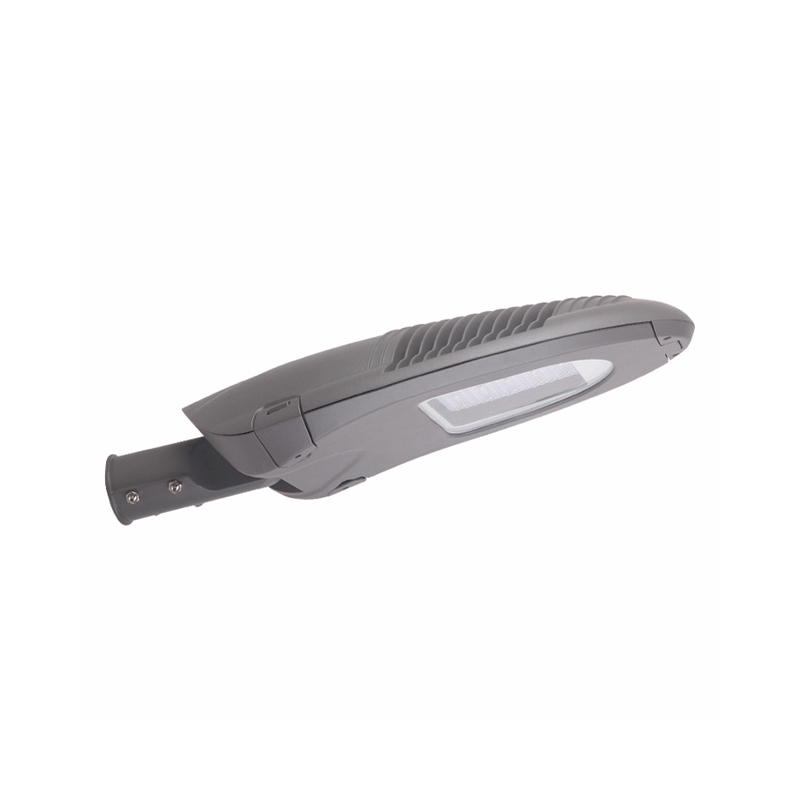
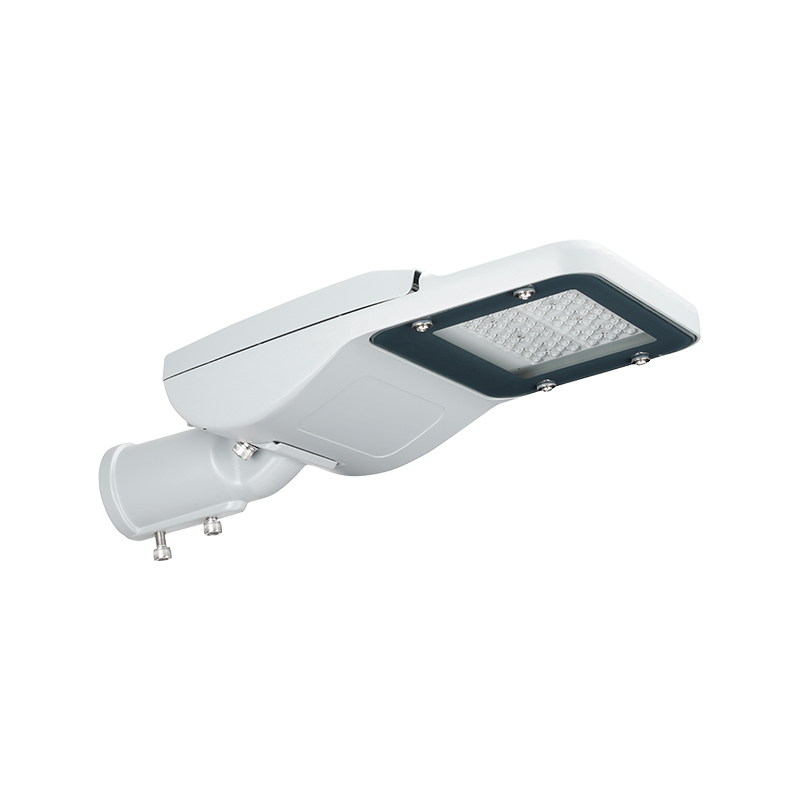
The Atlantic Lite series from Dingrui is built around this exact logic, offering 120 lm/W to 180 lm/W across 50 W to 240 W so specifiers can match the efficiency class to the road hierarchy. Buyers who compare only fixture price will miss the operating cost hidden in that efficiency gap.
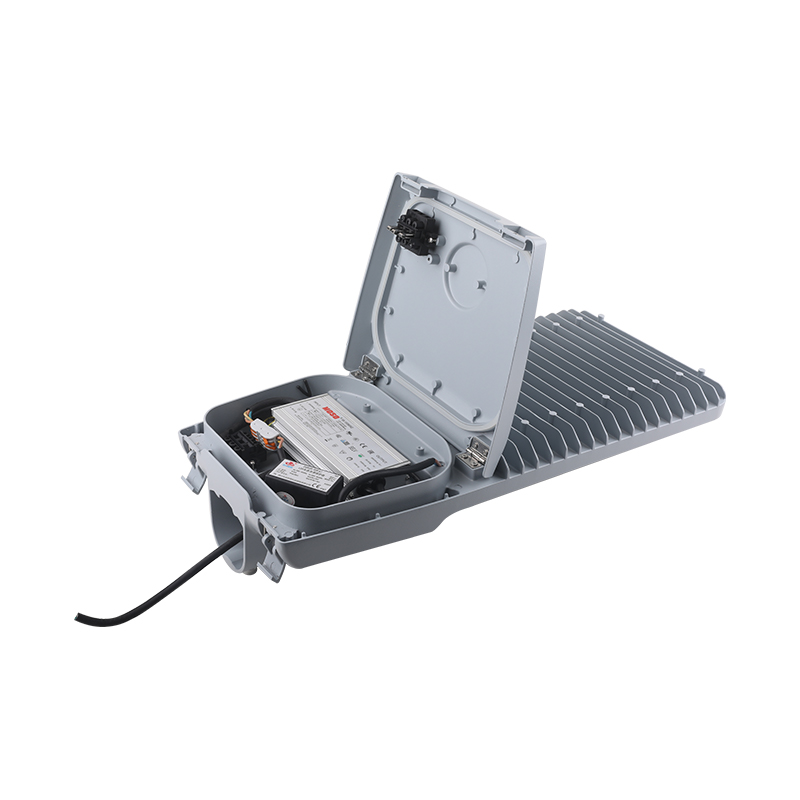 Atlantic Lite LED Street Light with 120-180 lm/W EfficiencyThis street light offers a wide efficiency range of 120 to 180 lm/W across 50 to 240 watts, allowing specifiers to match energy performance to road hierarchy and manage long-term operating costs.View Product →
Protection Ratings Decide Whether an LED Road Lighting Fixture Lasts
IP and IK ratings predict a road light’s survival in rain, dust, vibration, and impact zones.
IP66 means the housing is dust-tight and protected against powerful water jets; IK08, IK09, and IK10 describe resistance to impact energy of 5, 10, and 20 joules. In a roadside environment, flying stones, cleaning equipment, and maintenance handling make impact resistance as important as waterproofing. An IP66 fixture can still fail if debris cracks the optical cover hard enough.
| Rating | Meaning | Typical road application |
| IP66 | Dust-tight; protected against powerful water jets | Coastal roads, rain-exposed urban streets |
| IK08 | 5 J impact energy | Residential streets with low vandalism risk |
| IK10 | 20 J impact energy | Highways, tunnels, industrial areas |
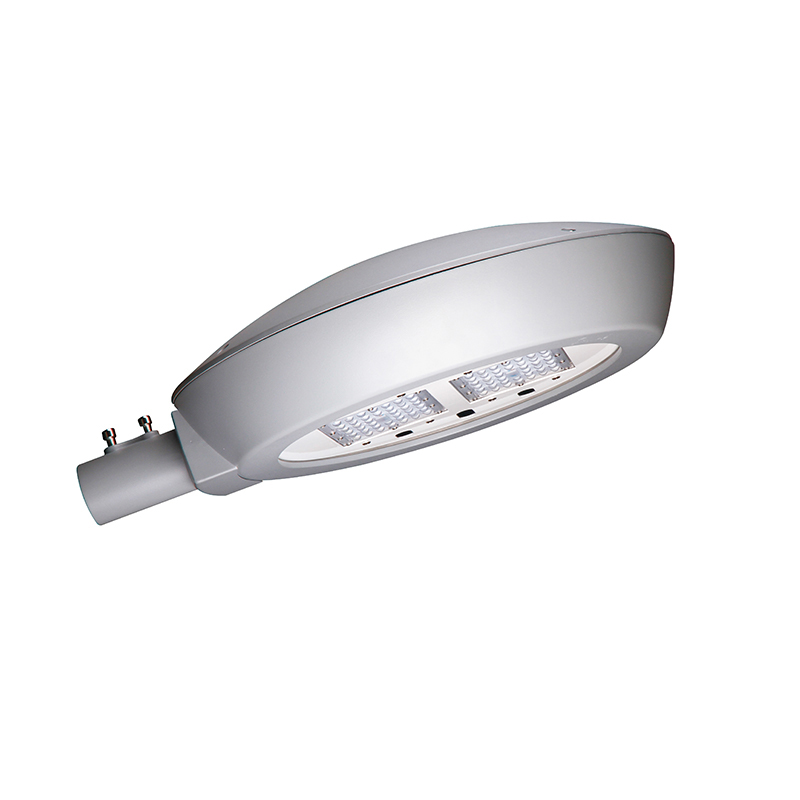
Dingrui applies these ratings across its street light portfolio. The Savanna series combines IP66 waterproofing with IK09, while the Nova series reaches IP66 and IK10 with a modular housing. For specifiers, the rating table should match the physical threat level of the site, not the marketing sheet.
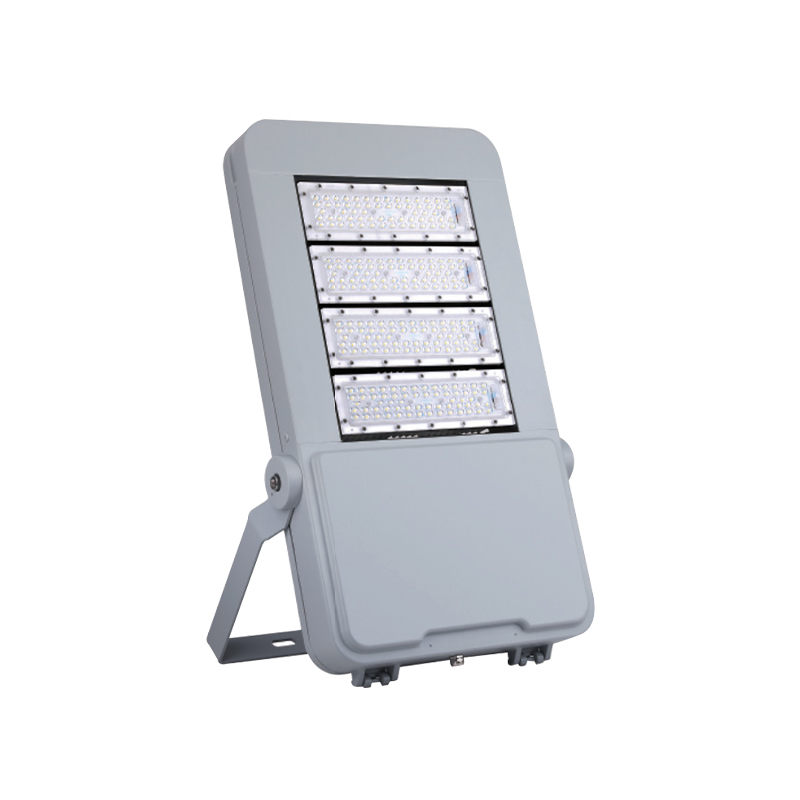 Nova Modular LED Street Light with IP66 and IK10 ProtectionFeaturing a robust IP66 and IK10 rating, this modular street light withstands dust, water jets, and impacts up to 20 joules. Its tool-free gear compartment simplifies maintenance, making it suitable for demanding outdoor environments.View Product →
IK08 absorbs 5 joules, about the impact of a hard dropped tool. IK10 absorbs 20 joules, roughly four times that energy, which suits areas where branches, debris, or deliberate impact are common.
Modular LED Road Lighting Lowers Lifetime Maintenance
A modular engine turns a failed LED road lighting unit from a whole-fixture replacement into a ten-minute module swap at pole level.
Traditional sealed road lights force crews to lower the pole, disconnect wiring, remove the complete housing, and install a new unit. Modular designs separate the driver, LED board, and optic so the maintenance team replaces only the failed section. Dingrui’s Nova series and Fortune Modular series both follow this logic, and the Pacific Pro series adds adjustable arms for public lighting sites where the aim angle may need on-site correction.
- Open the hinge on the luminaire housing.
- Slide out the failed driver or LED module.
- Insert the replacement module with the same wattage and optic.
- Close the housing and verify the photometric aim.
Needs a lifting vehicle, re-wiring, realignment, and disposal of the complete housing. Downtime can stretch from hours to days.
One driver or LED board is replaced on site in about 10–15 minutes. Spare inventory shrinks to a small module, not a full luminaire.
Total Cost of Ownership in LED Road Lighting Projects
Acquisition price is the smallest line item in a ten-year LED road lighting budget; energy and maintenance consume far more.
| Technology | System power | 10-year energy per fixture |
| 250 W HPS with control gear | About 280 W | About 10,220 kWh |
| Entry LED road light at 120 lm/W | 125 W | About 4,560 kWh |
| High-efficacy LED at 180 lm/W | 83 W | About 3,030 kWh |
Total cost of ownership in LED road lighting is acquisition plus energy, maintenance, and disposal measured over the fixture’s design life. A fixture at 120 lm/W and a fixture at 180 lm/W can differ by more than 1,500 kWh per pole over ten years even when they produce the same light output. Maintenance strategy adds another layer: modular fixtures reduce spare-part cost and outage time, while certified production reduces the risk of batch-level defects.
Total cost of ownership in LED road lighting = acquisition + energy + maintenance + disposal, measured over the fixture’s design life.
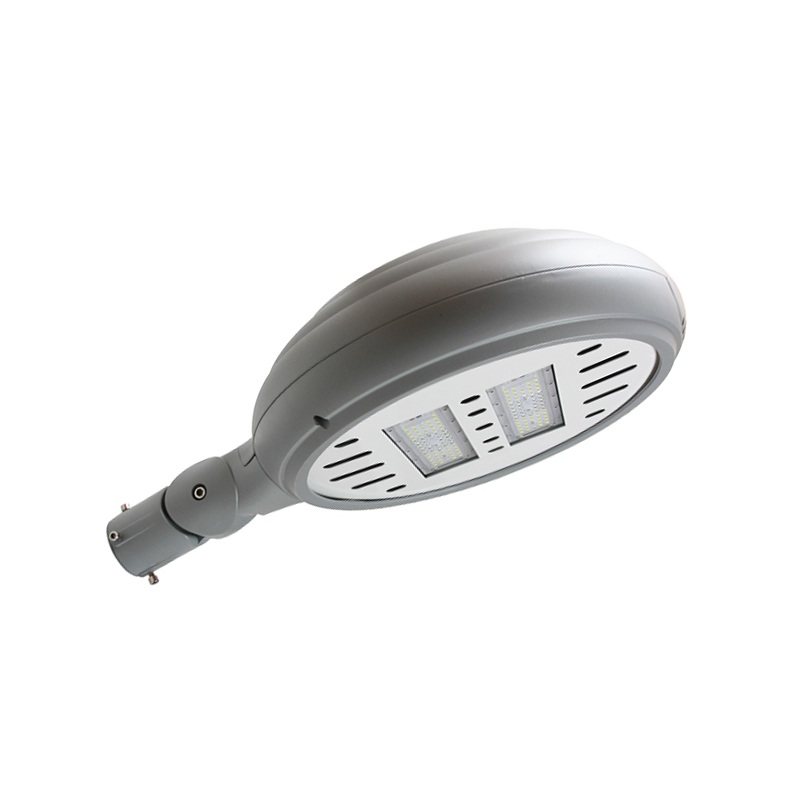
Dingrui’s manufacturing base covers 20,000 square meters, employs more than 200 people, and holds more than 20 patents. The company states compliance with CE, RoHS, ISO9001, and UL standards, and its high-power Atlantic series covers 100 W to 300 W with an IP66 housing for arterial roads that need consistent output in harsh exposure.
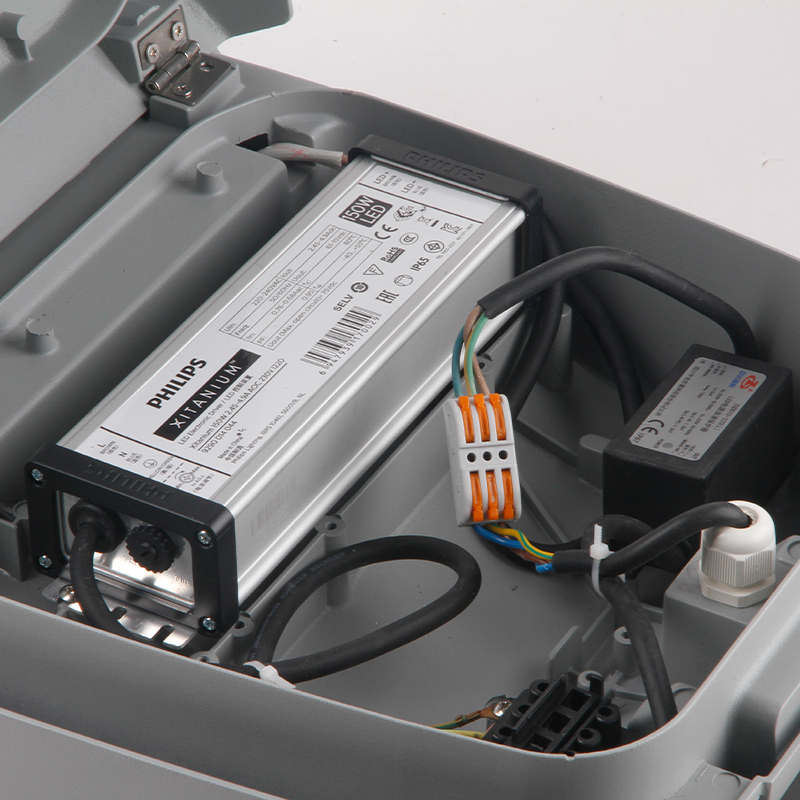 Atlantic LED Street Light with IP66 Housing for Harsh ConditionsDesigned for arterial roads, this 100-300W fixture provides IP66 protection against dust and powerful water jets. Its high-pressure die-cast aluminum body and corrosion-resistant coating ensure durability in extreme weather.View Product →
FAQ: Common LED Road Lighting Questions
What is the difference between IP66 and IK10 in LED road lighting?
IP66 defines a fixture’s resistance to dust and powerful water jets, while IK10 defines its resistance to impact energy of 20 joules. A road light for a tunnel or industrial corridor should satisfy both.
How many lumens per watt should a good LED road light reach?
For current tenders, 120 lm/W is the entry point, 150 lm/W is a typical efficient solution, and 180 lm/W represents the higher end available in series such as the Atlantic Lite.
Does modular design really reduce maintenance cost?
Yes. A failed driver or LED board can be swapped at pole level instead of sending the full housing to a workshop, which reduces labor time, spare inventory size, and lighting downtime.
What certifications should an LED road lighting supplier hold?
For international projects, look for CE and RoHS for the EU, UL for North America, and ISO9001 for production quality control. Dingrui states compliance with all four.
The practical conclusion: specify LED road lighting by efficacy first, add the IP and IK levels the site actually threatens, then choose a modular design that keeps failures cheap. Build a ten-year total cost model around those three facts before talking about price, and the fixture that looks expensive on paper will often be the least expensive on the street.


 Add.: Jiepai Town, Danyang City, Jiangsu Province, China.
 Tel: +86-0510-86219899
 Phone: +86-18601236320
 Email:
