 +86-0510-86219899

 English
 English
 русский
 Español

Content
- 1 What Does a 20KV Surge Protected LED Street Light Protect Against?
- 2 ANSI C136.2 Surge Ratings: Why 20KV Means High Exposure
- 3 How a 20KV Surge Protected LED Street Light Reduces Maintenance Costs
- 4 Specifying a 20KV Surge Protected LED Street Light: Housing, SPD, and Earthing
- 5 Verifying the 20KV Claim Before You Buy
- 6 FAQ: 20KV Surge Protected LED Street Light Specifications
A 380-fixture highway lighting project on a coastal corridor lost 41 LED drivers in a single storm season. Every warranty return showed the same signature: the driver input stage had been punctured by a lightning-induced transient that no surge protection device had clamped. That pattern is why procurement teams now specify a 20KV surge protected LED street light as a default requirement rather than an optional extra.
A 20KV surge protected LED street light is a luminaire with an integrated surge protection device (SPD) that can withstand transient overvoltages up to 20 kilovolts, equivalent to the ANSI C136.2 Category C high-exposure class. The SPD clamps induced lightning transients before they reach the LED driver, preserving both the driver and the LED array.
This guide explains what a 20KV rating really protects against, how ANSI C136.2 exposure levels map onto real road sites, why the rating changes maintenance economics, and which housing, SPD, and earthing details separate a certified surge-rated fixture from a marketing sticker. When you compare fixtures, read the surge spec alongside the efficiency metrics used in urban applications to build a complete procurement profile.
A storm cell passing through a lightning-prone corridor can spike warranty claims for weeks. The difference between a route with 20KV-rated luminaires and one without is visible in the maintenance log, not just in the test certificate.
What Does a 20KV Surge Protected LED Street Light Protect Against?
A 20KV surge protected LED street light protects the two most expensive components in the fixture: the LED driver and the LED array. Transient overvoltages travel in through the AC mains; without an SPD, the voltage spike breaks down the driver's input capacitors and switching transistors, and the failure often takes the LED module with it.
The rating describes the maximum impulse voltage the SPD can repeatedly absorb, not the steady-state operating voltage. In a 20KV event, a correctly sized metal-oxide varistor or gas-discharge tube conducts the excess energy to earth within microseconds, holding the voltage at the driver input to a safe level.
A transient overvoltage is a short voltage spike of up to several kilovolts on the mains line, lasting only microseconds. For outdoor lighting, lightning-induced transients between 6KV and 20KV are the most common cause of driver failure.
| Surge source | Typical voltage | Main damage mechanism |
| Inductive load switching nearby | 1 - 4KV | Intermittent driver lockout |
| Grid switching and capacitor banks | 2 - 6KV | Progressive driver degradation |
| Indirect lightning within 1 - 2 km | 6 - 20KV | Driver input stage breakdown |
| Direct lightning on pole or line | Above 20KV | Catastrophic fixture failure |
20KV is the industry threshold for high-exposure roadside luminaires. Below that rating, an SPD still handles switching transients, but it saturates quickly in lightning-prone coastal and mountain zones.
ANSI C136.2 Surge Ratings: Why 20KV Means High Exposure
ANSI C136.2-2018 separates surge requirements into three exposure levels, and 20KV is the Category C threshold for the highest-risk sites. Category A covers residential streets and low lightning-density zones at 6KV; Category B covers urban arterials and mixed grids at 10KV; Category C covers coastal roads, mountain passes, and industrial corridors at 20KV.
The exposure level determines which waveform the luminaire must survive. ANSI C136.2 compliance testing uses a combination wave with a 1.2/50 microsecond voltage component and an 8/20 microsecond current component, applied repeatedly at the rated voltage.
| Exposure level | Withstand voltage | Typical installation site |
| Category A, low | 6KV | Residential streets, low lightning density |
| Category B, medium | 10KV | Urban arterials, mixed grid conditions |
| Category C, high | 20KV | Coastal roads, mountain passes, industrial zones |
Typical peak transient voltages by environment
Indicative values based on ANSI C136.2 and IEEE C62.41.2 guidance. A direct strike produces far higher energy and needs external lightning protection.
The rating describes withstand capability against induced transients, not immunity to direct strikes. A 20KV-rated SPD is sized for the combination wave defined in ANSI C136.2 Category C, not for the energy of a direct lightning attachment.
How a 20KV Surge Protected LED Street Light Reduces Maintenance Costs
Surge protection is the least expensive insurance a road lighting operator can buy. Field return analyses across outdoor LED installations typically attribute 20 to 40 percent of premature driver failures to surge events; a 20KV-rated integrated SPD reduces that share to single digits in most lightning-prone regions.
A 1,000-fixture contract with a 5 percent annual surge failure rate produces 50 replacement callouts per year. Cutting the annual rate to 2 percent saves 30 truck rolls per year. On most projects, that saving alone covers the price difference between a standard and a 20KV surge protected LED street light within the first two years.
Surge protection also protects the LED array indirectly. When a driver fails from overvoltage, it frequently sends uncontrolled current into the module before the protection opens, causing permanent lumen depreciation in otherwise healthy LEDs. Keeping the driver alive keeps the optical output and the energy-consumption profile stable across the project life.
Specifying a 20KV Surge Protected LED Street Light: Housing, SPD, and Earthing
A 20KV rating on a datasheet is only one link in the protection chain. The housing, the SPD architecture, and the earthing at the pole determine whether that rating translates into real field survival.
Die-cast aluminum housing supports SPD thermal stability
SPD clamping performance drifts when internal temperature climbs. A high-pressure aluminum die-cast housing acts as a heat sink for both the driver and the SPD, keeping them inside their operating envelopes during successive surge events. Jiangsu Dingrui Lighting Technology Co., Ltd., a China-based manufacturer of outdoor LED lighting, builds the Atlantic Pro street light series around high-pressure aluminum die-casting for demanding roadside duty.
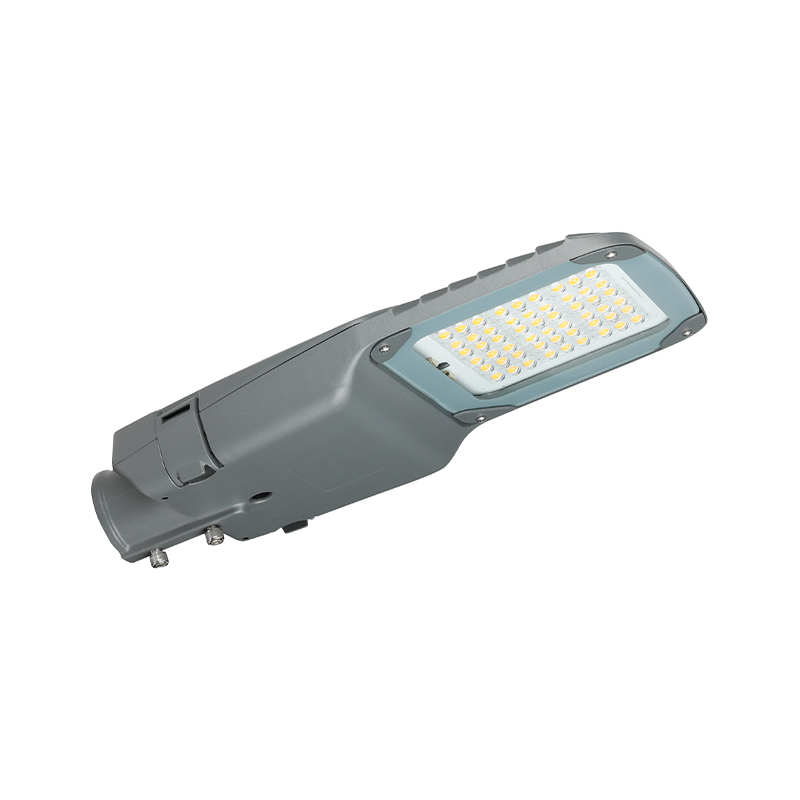
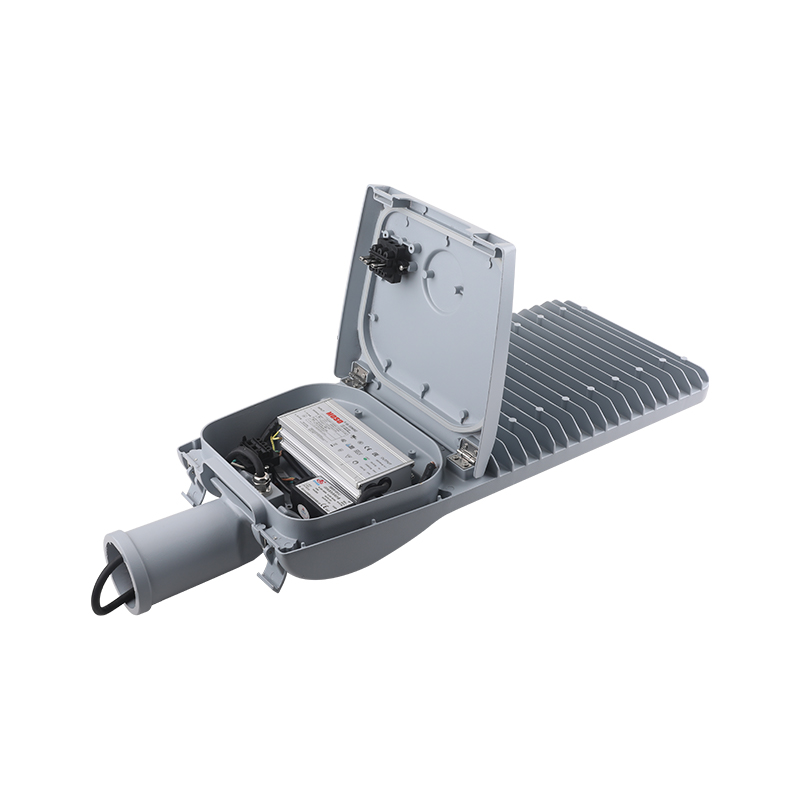 Atlantic Pro LED Street Lights with High-Pressure Die-Cast Aluminum HousingThis street light series uses high-pressure aluminum die-casting to dissipate heat from the driver and SPD, supporting reliable operation during repeated surges. Its IP66 rating and tool-free detachable design make it practical for roadside maintenance.View Product →
Modular SPD architecture cuts replacement downtime
An integrated but replaceable SPD module is the most serviceable layout. If the SPD thermally disconnects after an extreme surge, the luminaire keeps operating in bypass mode, and a crew swaps the module without opening the optical chamber or removing the fixture from the pole. The Nova series modular LED street light from Dingrui Lighting pairs this serviceability with IP66 weather protection and an IK10 impact rating, both relevant to high-exposure sites.
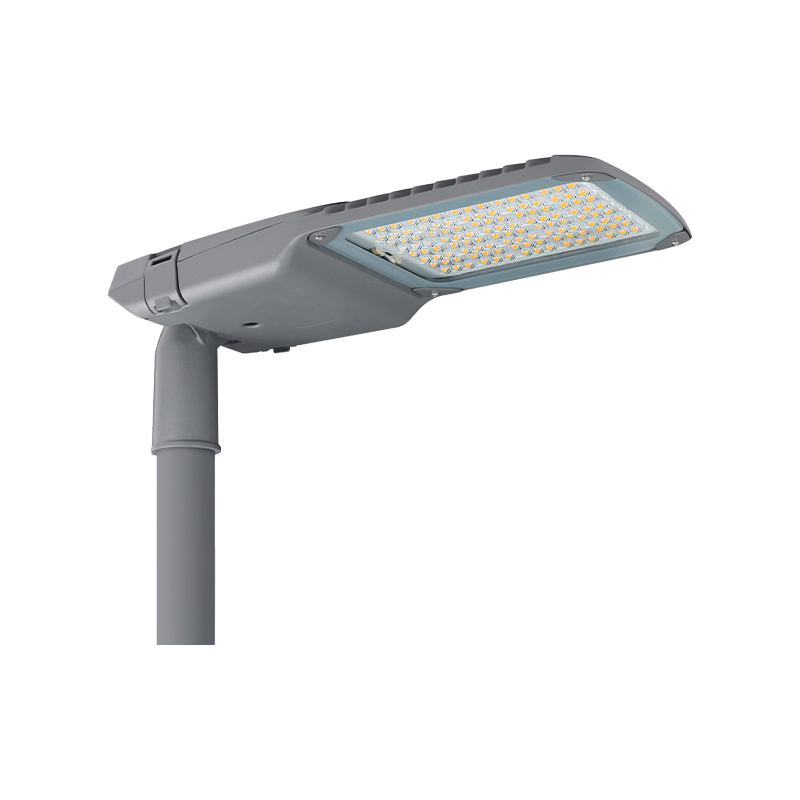
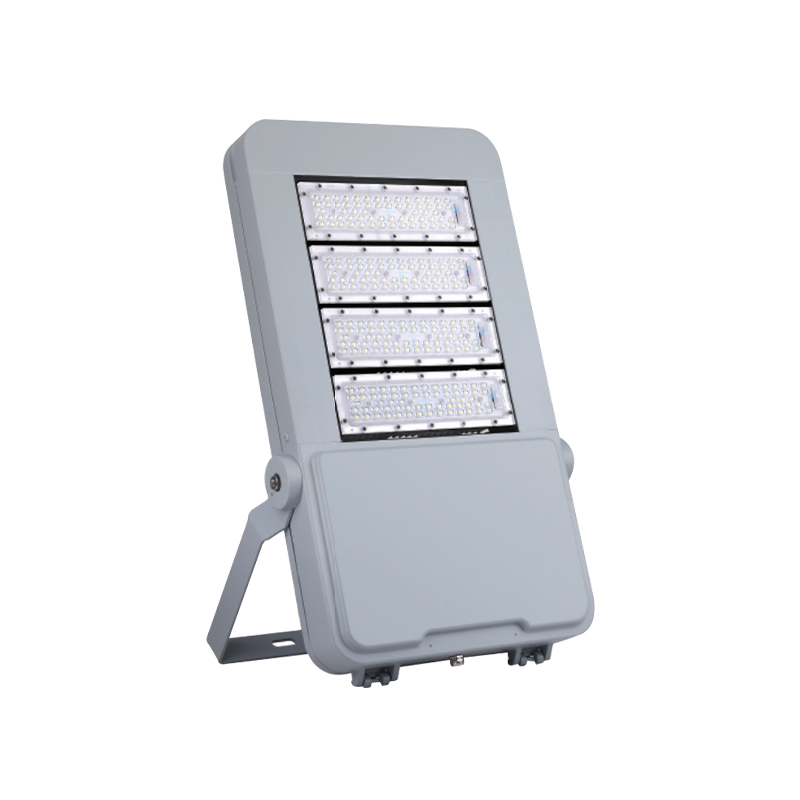 Nova Series Modular LED Street Light with IP66 and IK10 ProtectionThis modular luminaire features a tool-free gear compartment for quick component replacement, with a 20KV SPD option and robust die-cast aluminum construction. It is particularly relevant when surge protection must remain serviceable without removing the fixture.View Product →
Earthing and cable routing decide the real-world result
A 20KV SPD cannot work without a proper earth path. The surge current has to return to ground through the pole earthing circuit; if that circuit is high-resistance, the voltage spike reflects back into the driver. Apply these site checks:
- Keep pole earthing resistance below 10 ohms.
- Route SPD leads as short as practical, under 0.5 m.
- Do not rely on the distribution-line arrester as the only earth path.
- Verify the neutral-to-earth bond at the pole base before energizing.
The best SPD in the market cannot overcome a high-resistance earth connection. Verify grounding resistance before energizing a 20KV-rated luminaire.
Verifying the 20KV Claim Before You Buy
Ask for a test report, not a datasheet line. A credible 20KV surge protected LED street light carries a test certificate showing the exact waveform, the number of applied surges, and the pass-fail criteria.
- Combination wave with 1.2/50 microsecond open-circuit voltage and 8/20 microsecond short-circuit current.
- Minimum 15 positive and 15 negative surges per polarity at the rated voltage level.
- No visible damage, no isolation breakdown, and continuous driver operation after the test sequence.
- An SPD end-of-life indicator such as a thermal disconnector or a visible status flag.
A datasheet that lists 20KV without a waveform, a pulse count, or a test standard is a marketing claim. A datasheet that references ANSI C136.2 and attaches a completed test certificate is an engineering specification.
Pair the surge certificate with the luminaire's efficiency and photometric documentation in the same tender file, so the surge rating and energy performance are verified against the same installation conditions.
FAQ: 20KV Surge Protected LED Street Light Specifications
What does 20KV mean on an LED street light?
20KV is the maximum transient overvoltage the integrated SPD can clamp under a defined combination wave. It does not describe the operating voltage. A luminaire bearing this rating is designed for ANSI C136.2 Category C high-exposure sites.
Can a 20KV surge protected LED street light survive a direct lightning strike?
No. A direct strike on the pole or fixture involves hundreds of kilovolts and requires external lightning protection with air terminals and down conductors. The 20KV SPD exists for induced transients from nearby strikes, which cause the majority of surge failures in road lighting.
Should a 20KV-rated luminaire still work with a pole-base arrester?
Yes. The pole-base arrester handles partial lightning current before it enters the branch wiring, and the integrated luminaire SPD handles residual induced transients. The two devices must be coordinated by the project electrical designer so their voltage and energy ratings do not conflict.
How can a buyer verify a supplier's 20KV surge rating?
Request the ANSI C136.2 or IEC 61643 test report with the waveform, pulse count, and pass-fail results. Confirm the SPD includes a thermal disconnect and end-of-life indication. Finally, match the housing, IP rating, and driver ratings to the surge level specified in the tender.
A 20KV surge protected LED street light is a specification decision with measurable field consequences: fewer driver failures, fewer truck rolls, and stable light output over the project lifetime. Verify the test report, coordinate the earthing, and specify the housing accordingly.
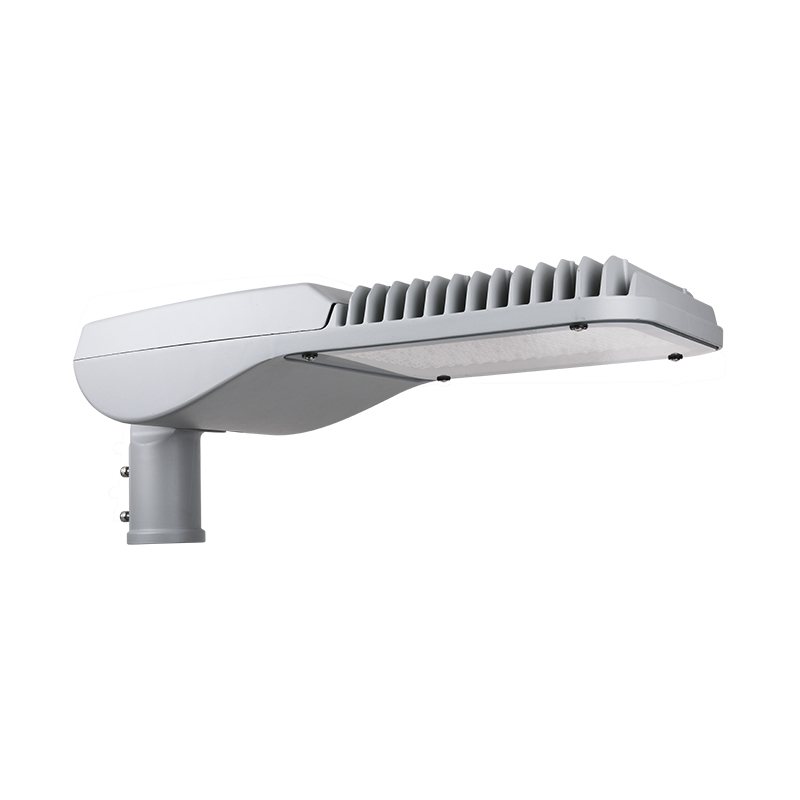
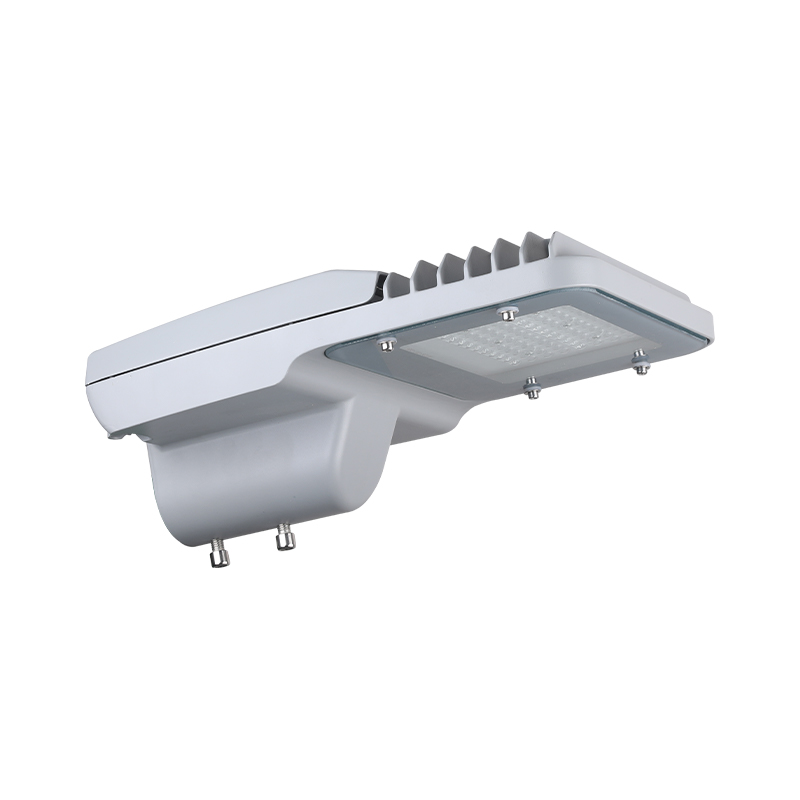


 Add.: Jiepai Town, Danyang City, Jiangsu Province, China.
 Tel: +86-0510-86219899
 Phone: +86-18601236320
 Email: