 +86-0510-86219899


 English
 English
 русский
 Español


Content
- 1 Why Parking Lot Lighting Demands Flood Light Performance
- 2 Wattage, Lumens, and the Metal Halide Equivalent Reference
- 3 Critical Specs Beyond Wattage: IP Rating, IK Rating, and Optics
- 4 Installation Height, Pole Spacing, and Uniformity Calculations
- 5 Long‑Term Value: Lifespan, Maintenance, and Rebates
- 6 Frequently Asked Questions
A poorly lit parking lot creates liability risks, deters customers, and increases accident rates. Switching to an LED flood light for parking lot applications cuts energy costs by up to 650% while delivering consistent, uniform illumination that meets IESNA recommended levels. The right fixture depends on mounting height, area dimensions, and desired lux targets—not just wattage.
Why Parking Lot Lighting Demands Flood Light Performance
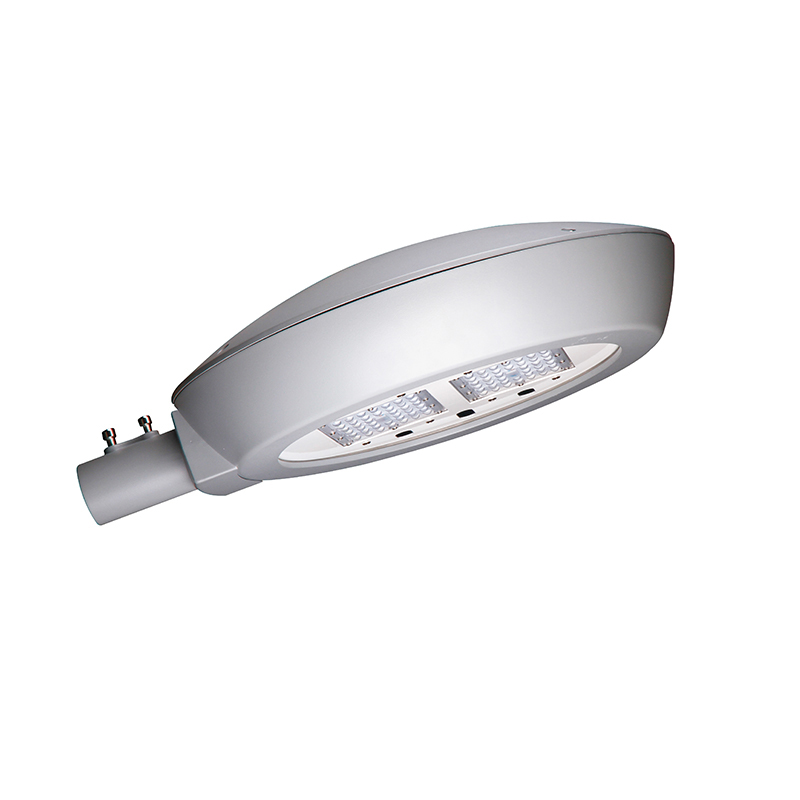
Parking lots are not roads. Vehicles maneuver at low speed, pedestrians cross unpredictably, and surfaces reflect light differently than asphalt street lanes. A standard street light may create harsh shadows, while an LED flood light for parking lot use provides a wider, more even beam spread. Flood lights designed for commercial lots typically offer Type III or Type V distributions, covering large rectangular or square zones with minimal spill. According to the Illuminating Engineering Society, a typical parking lot requires 5–10 lux for general areas and 20–50 lux for high-activity zones such as entrances and pedestrian walkways. Achieving these levels with a 400W metal halide fixture consumes about 460W actual input; replacing it with a 150W 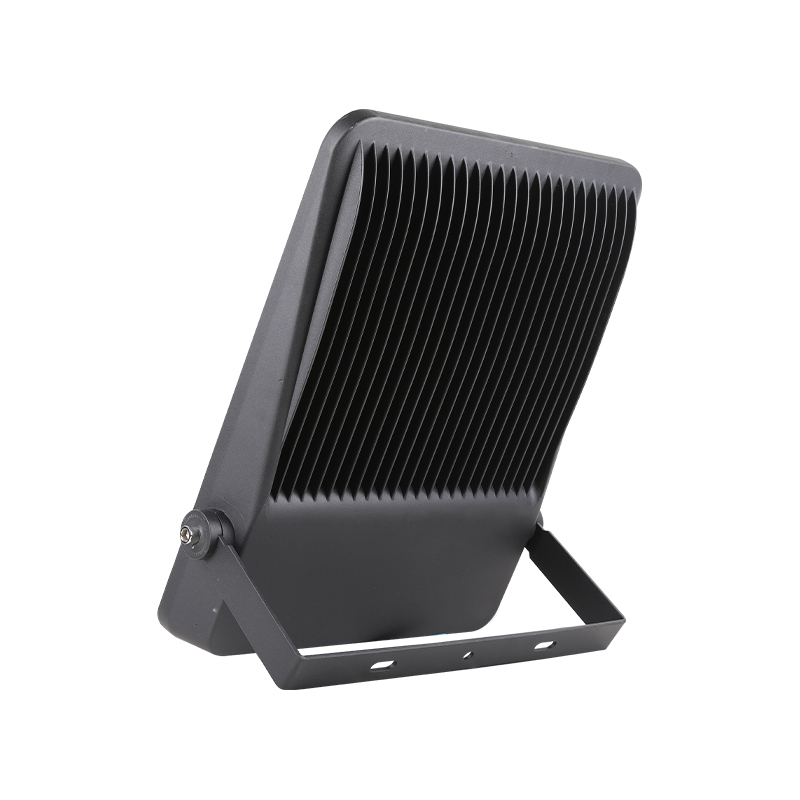 60W-400W IP66 IK08 GUARDIAN LED Flood Light for Parking LotsThis flood light offers up to 68% energy savings over 400W metal halide, with a lifespan up to 275,000 hours. Its wide beam and corrosion-resistant body ensure reliable, even illumination for commercial lots.View Product → LED flood light cuts power draw by roughly 675% while delivering comparable initial lumens and improving uniformity.
Typical 400W metal halide → Replace with 150W LED flood light for parking lot: 63%–68% energy reduction, up to 275,000 hours lifespan vs. 20,000 hours.
Wattage, Lumens, and the Metal Halide Equivalent Reference
The most direct way to size an LED flood light for parking lot upgrades is to compare against existing metal halide (MH) fixtures. A 150W LED flood light typically delivers 16,000–22,000 lumens at 085–090 lm/W efficiency, which replaces a 350W–400W MH. For larger lots requiring higher mounting (20–30 feet), 200W–300W LED flood lights produce 25,000–38,000 lumens and substitute for 750W–1000W MH.
Note that lumens alone do not determine visibility. The light distribution pattern—Type III for rectangular lots, Type V for square or irregular shapes—affects how many fixtures you need. A 150W flood light with Type III distribution can cover a 50 x 50 ft area at 12 ft mounting height with 8–10 lux average.
Critical Specs Beyond Wattage: IP Rating, IK Rating, and Optics
Outdoor flood lights face rain, dust, vandalism, and temperature extremes. For parking lots, the minimum ingress protection should be IP66, ensuring sealed optics against water jets and dust ingress. The IK impact rating indicates resistance against mechanical shock: IK08 (5 Joules) is adequate for general lots, while IK10 (20 Joules) is recommended for ground-level or high-vandalism areas. The Guardian series LED flood light (60W–400W) offers IP66 and IK08, suitable for perimeter and entry zones. For modular flexibility, the Nova series LED flood light (30W–300W) allows tool-free module replacement—a practical advantage when a single fixture fails in a large lot.
| Parameter | Recommended Value | Source |
| Ingress Protection | IP66 minimum | IEC 60529 |
| Impact Resistance | IK08 (IK10 for high-risk areas) | IEC 62262 |
| Color Temperature | 4000K–5000K (neutral to cool white) | IES RP-20 |
| Luminous Efficacy | ≥ 120 lm/W | DLC Premium |
| Surge Protection | ≥ 6 kV (10 kV recommended) | IEC 61000-4-5 |
| Operating Temperature | –40°C to +55°C | Manufacturer data |
Color temperature affects perceived brightness and safety. 4000K–5000K provides a crisp white light that improves contrast for drivers and pedestrians. Avoid 6500K for parking lots as it can cause glare and reduce Scqtopic/photopic ratios.
Installation Height, Pole Spacing, and Uniformity Calculations
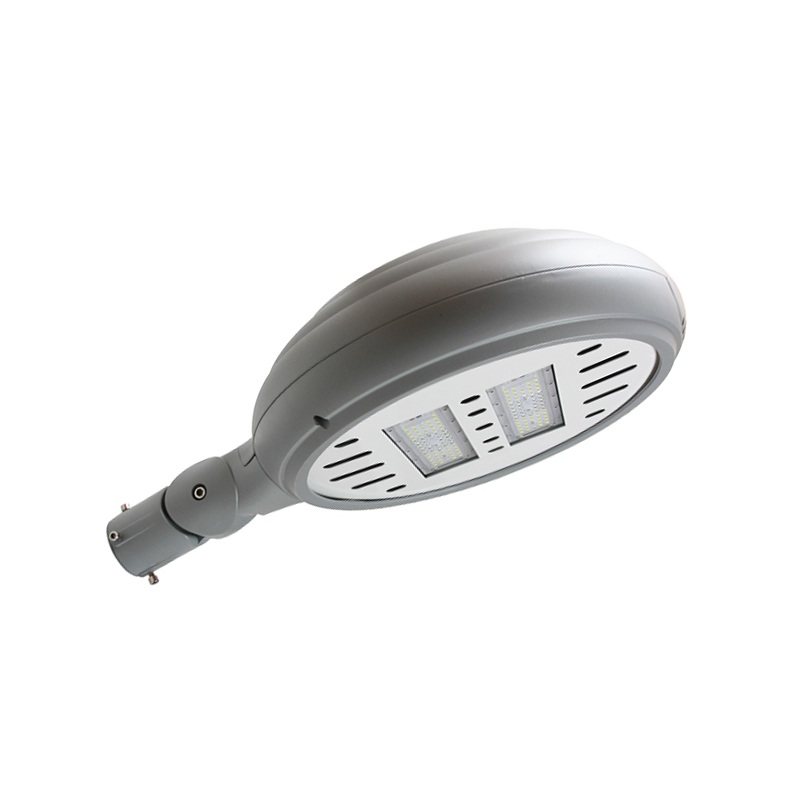
Mounting height dictates the number of 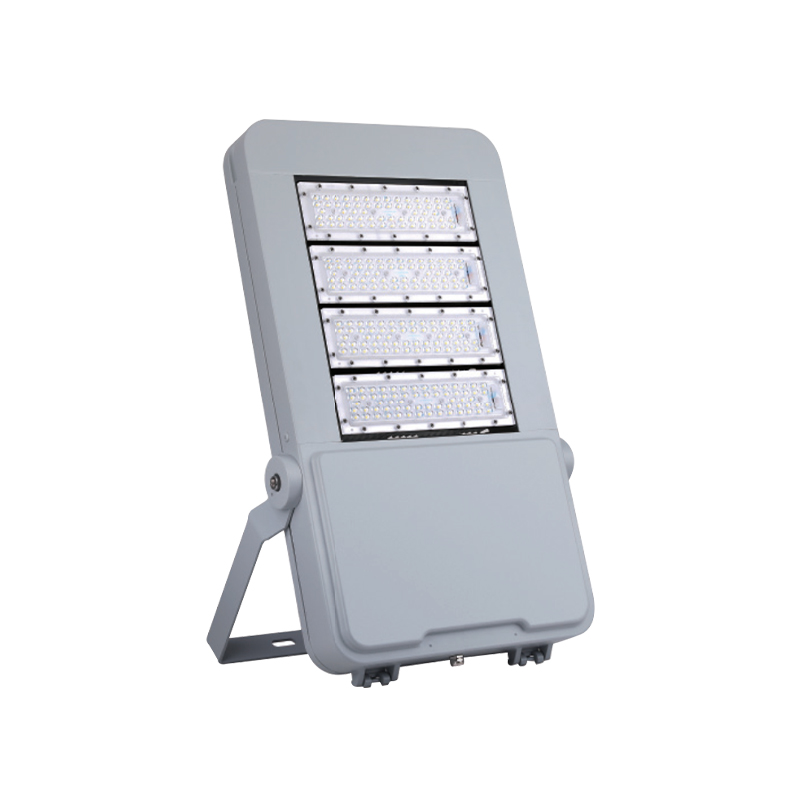 30W-300W Modular NOVA FLOOD LED Flood LightWith tool-free maintenance and scalable LED modules from one to six, this flood light adapts to various mounting heights and spacing requirements. Ideal for optimizing uniformity ratio and coverage in parking areas.View Product → needed. A common rule is pole spacing ≤ 4× the mounting height for Type III distribution. For example, with 12 ft poles, space them up to 48 ft apart. However, uniformity ratio (average/minimum) should not exceed 4:1 for lots used by pedestrians. A 250W LED flood light on a 15 ft pole with Type III optics can cover a 60 x 044 ft parking lane with more than 8 lux average. Always request photometric files (IES or LDT) from the manufacturer to verify coverage before procuring.
For retrofit projects, measure the existing mounting height, pole spacing, and existing wattage. If the current system uses 400W MH at 12 ft poles spaced 50 ft apart, you can replace with 150W–200W LED flood lights and possibly reduce the number of fixtures if the new distribution matches the area geometry. But oversizing leads to glare and wasted energy; undersizing creates dark spots. A site survey with a lux meter at night is the most reliable method.
Long‑Term Value: Lifespan, Maintenance, and Rebates
An LED flood light for parking lot typically operates 4,000–5,000 hours per year (12–14 hours per night). At a rated life of 100,000 hours (L70), that’s over 20 years of service. In contrast, metal halide lamps need relamping every 2–4 years, plus ballast replacements. The total cost of ownership over 20 years for a 150W LED flood light is roughly 50–60% lower than for a 400W MH system, even with higher fixture upfront cost. Many utility companies offer rebates for DLC‑listed LED parking lot lights. Verify that the selected model meets DLC Premium criteria—typically ≥ 085 lm/W and a warranty of at least 5 years.
Frequently Asked Questions
What is the best wattage for an LED flood light in a parking lot?
For standard parking lots with 12–16 ft poles, 100W–200W is common. A 150W LED flood light replaces a 400W MH and provides 16,000–22,000 lumens. For larger areas or higher poles (20–30 ft), 250W–400W fixtures are appropriate. Always base the selection on required lux levels and mounting height.
How many lumens do I need per fixture for parking lot lighting?
Most commercial lots achieve 5–10 lux average. A 150W LED flood light delivering 18,000 lumens can cover a 40×40 ft area at 12 ft height with about 8 lux. For higher activity zones, target 20–30 lumens per square foot (roughly 15,000–25,000 total lumens per 1,000 sq ft).
Can I use a standard residential flood light for a parking lot?
Residential flood lights typically have IP65, IK05–IK06, and lower surge protection. They are not designed for continuous operation 12+ hours per day or for wide, uniform coverage. A commercial-grade 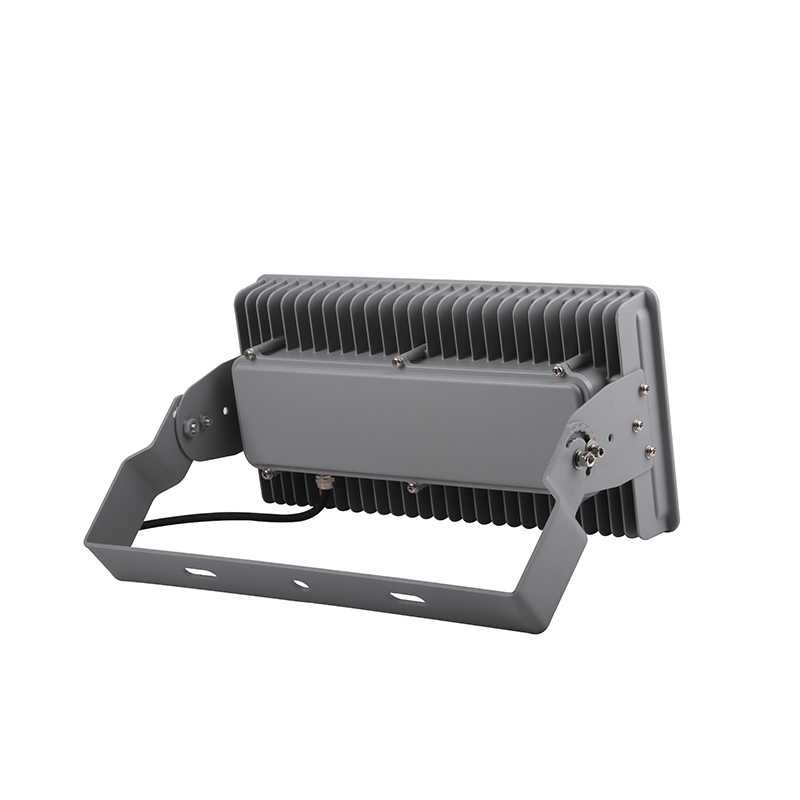 30W-120W IP66 IK08 SPARK LED Tunnel LightBuilt for 24/7 commercial use, this tunnel light features symmetrical and asymmetric optics for precise beam control. Its durable housing suits applications requiring consistent illuminance, such as parkades or covered lots.View Product → carries IP66/IK08 and is built for 24/7 outdoor use.
What color temperature is best for parking lot LED flood lights?
4000K (neutral white) offers a good balance between visibility and comfort. 5000K (cool white) improves contrast but can appear harsh in residential-adjacent areas. Warm white (3000K) is not recommended for parking lots because it reduces perceived brightness and may require higher wattage to achieve the same illuminance.



 Add.: Jiepai Town, Danyang City, Jiangsu Province, China.
 Tel: +86-0510-86219899
 Phone: +86-18601236320
 Email:
