 +86-0510-86219899

 English
 English
 русский
 Español

Content
- 1 What IP66 and IK09 Mean on an LED Street Light Spec Sheet
- 2 Why Road Projects Demand an IP66 IK09 LED Street Light
- 3 Where an IP66 IK09 LED Street Light Earns Its Cost
- 4 How to Verify an IP66 IK09 LED Street Light Against Its Ratings
- 5 Selection Parameters That Matter Beyond the IP66 IK09 Spec
- 6 IP66 IK09 LED Street Light FAQ
When a coastal city in Southeast Asia tendered 178 luminaires for a new ring road, the specification required IP66 and IK09 protection on every LED street light. The clause was not paperwork: salt-laden wind, monsoon spray and debris from routine maintenance had already pushed two older installations into premature replacement within three seasons. The IP66 IK09 LED street light requirement was a direct answer to measurable, predictable failure modes.
What IP66 and IK09 Mean on an LED Street Light Spec Sheet
IP66 and IK09 are two independent ratings that define how well a luminaire resists dust, water and mechanical impact. IP66 comes from IEC 60529 and describes enclosure protection. IK09 comes from IEC 62262 and describes impact energy resistance. They answer different questions: IP66 tells you what the housing keeps out, and IK09 tells you how much physical force the housing can absorb before the optical chamber cracks.
The IP66 code, decoded
The first digit of IP66, 6, means dust-tight construction, verified in an 8-hour dust chamber test with no dust entering the enclosure. The second digit, 6, means protection against powerful water jets, verified by spraying the fixture from a 12.5 mm nozzle at 100 kPa pressure from 3 metres for at least 3 minutes. That is the highest jet rating below the immersion classes IP67 and IP68.
What IK09 adds that IP66 cannot
IP ratings ignore physical force. A fixture can be dust-tight and waterproof yet still crack when a ladder falls against it or a mower flicks debris onto the lens. IK09 represents 10 joules of impact energy, one step below the maximum industrial rating IK10 at 20 joules and two steps above IK07 at 2 joules. The housing, lens and gasket seal must absorb that strike without losing protection or optical alignment.
The accent bar marks the 10-joule impact class this guide focuses on.
An IP66 IK09 LED street light is dust-tight, resists powerful jets of water, and survives a 10-joule mechanical impact without losing its protection rating or optical alignment.
Why Road Projects Demand an IP66 IK09 LED Street Light
Road lighting fails in three predictable ways: dust loading, water ingress and impact damage. The IP66 IK09 LED street light specification addresses all three with a single housing design.
- Monsoon and typhoon corridors: spray from passing trucks in heavy rain overwhelms IP65-rated housings within two or three wet seasons.
- Dust and sand zones: fine particles enter through unsealed venting gaps, coat the optical surfaces and cut useful light output by 20 to 30 percent over time.
- Low mounting heights: underpasses, tunnels and cycle paths expose fixtures to ball strikes, thrown objects and accidental contact.
- Maintenance access: ladders and dropped tools during driver replacement damage housings rated below IK08.
30-40%
of premature street light failures in coastal and industrial corridors are linked to water ingress, dust accumulation or housing impact, according to maintenance records reviewed across municipal lighting departments in exposed climate zones.
Where an IP66 IK09 LED Street Light Earns Its Cost
The combination earns its price premium in locations where exposure is aggressive and access for repairs is expensive.
Coastal and high-humidity roads
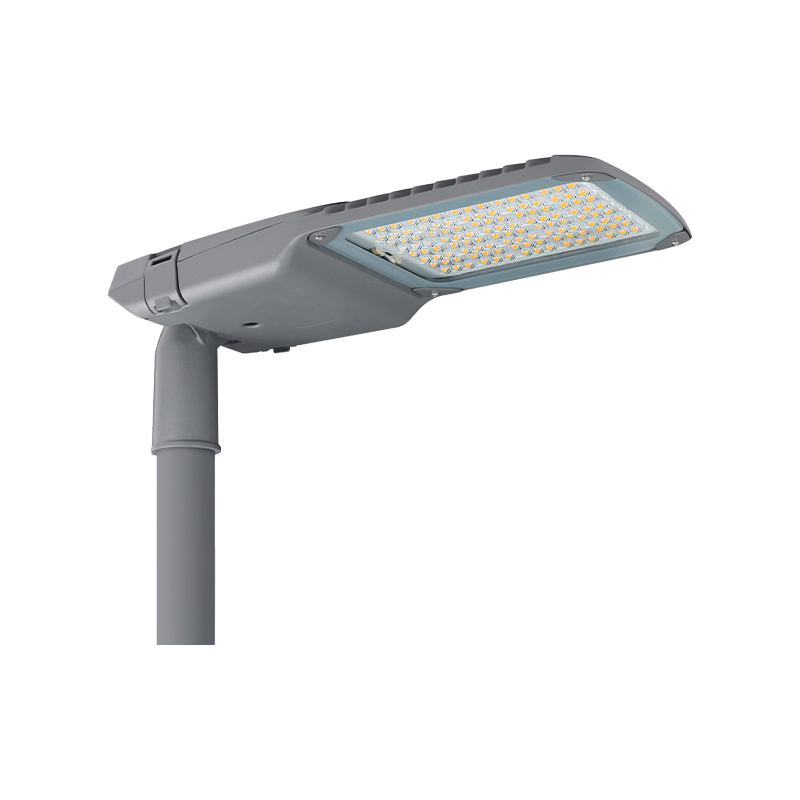
Salt-laden air accelerates corrosion as soon as humidity enters the driver compartment. A dust-tight, jet-proof housing keeps internal connections dry for the full rated life. The Savanna series from Jiangsu Dingrui Lighting Technology Co., Ltd. covers 30 W to 240 W with IP66 and IK09 ratings, which makes it a direct match for seafront roads, toll plazas and elevated expressways in tropical climates.
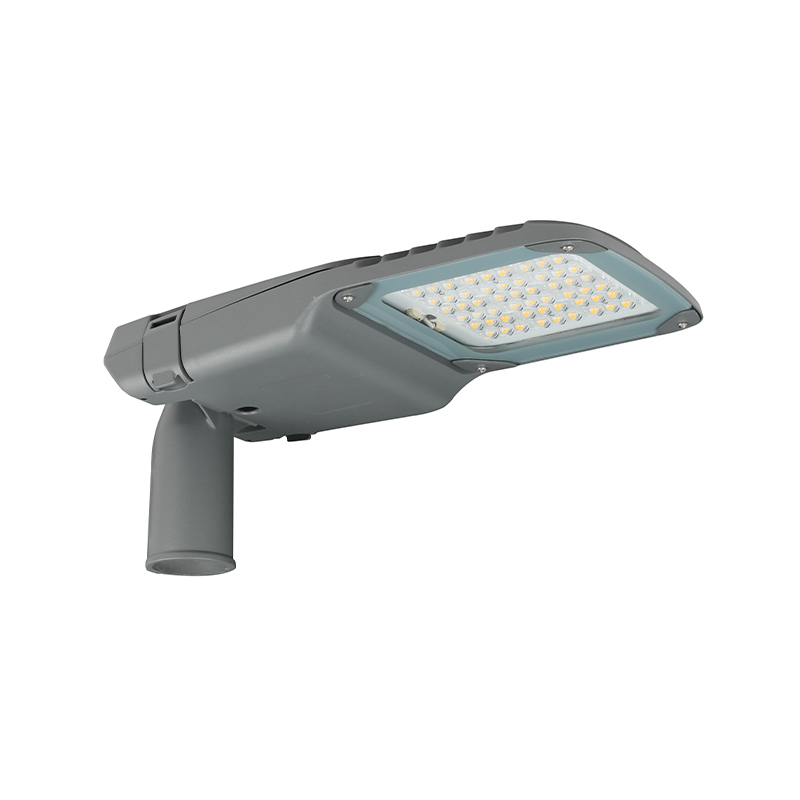 SAVANNA Series LED Street Lights with IP66 and IK09 ProtectionDesigned for coastal and highway environments, this fixture offers dust-tight and jet-proof housing, tool-free maintenance, and a corrosion-resistant die-cast body. The adjustable angle and optional sensors adapt to varied road lighting requirements.View Product →
Industrial districts and highway corridors
Heavy truck traffic, vibration and airborne particulates punish fixtures without fully sealed optics. Stray gravel and loading equipment contact housings at road level, so the impact class matters. The Nova series upgrades the impact class to IK10 inside a modular IP66 housing, and its removable optical module simplifies cleaning and driver replacement without lifting the whole arm.
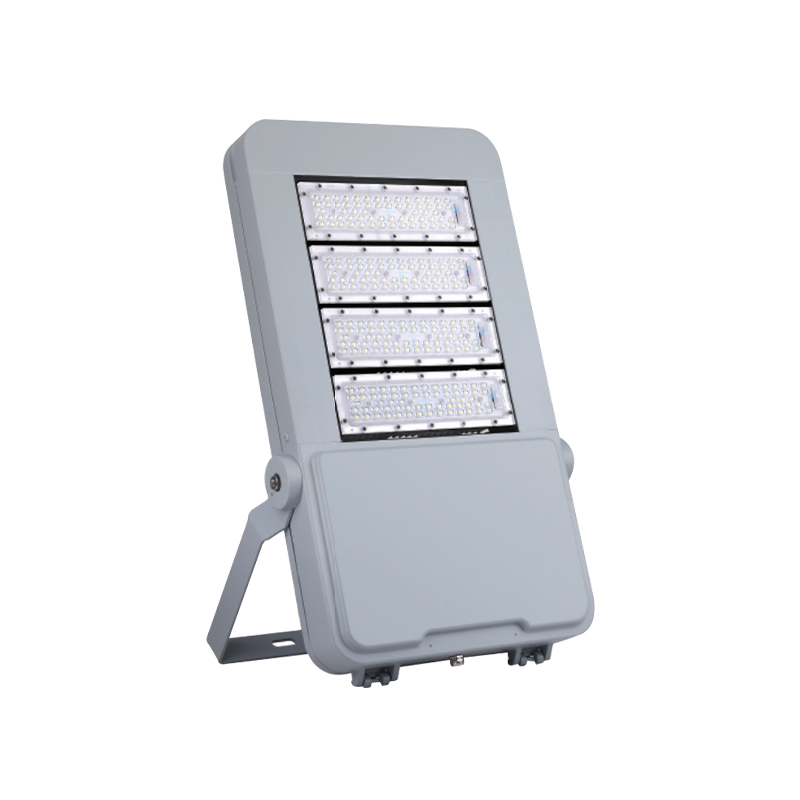 NOVA Series Modular LED Street Light with IK10 Impact ResistanceFeaturing a modular engine and tool-less gear compartment, this street light simplifies maintenance and upgrades. Its IP66 housing and IK10 rating suit demanding roadways, while adjustable mounting supports side entry and top installation.View Product →
Public spaces, underpasses and mixed-use streets
Where pedestrians, cyclists and maintenance vehicles share space, an IK09 housing reduces replacement frequency and the safety risk of cracked lenses shedding debris. Underpasses also accumulate traffic dust, so dust-tight construction preserves photometric performance between cleaning cycles.
Every unplanned replacement in a tunnel or underpass costs roughly three to five times the fixture price once traffic control, crew time and night closures are included.
IP66
Dust-tight, jet-proof enclosure
IK09
10 J impact resistance
50k h
L70 rated life target
120-180
Effective lm/W range
How to Verify an IP66 IK09 LED Street Light Against Its Ratings
A rating printed on a datasheet is a claim, not proof. Verification requires accredited test reports, visible design evidence and documentation that names the exact model you intend to buy.
The three test reports that matter
| Test | Standard | Pass condition |
| Dust tightness | IEC 60529 (IP6X) | No dust inside after 8 hours in a dust chamber |
| Water jet resistance | IEC 60529 (IPX6) | No harmful water entry after a 100 kPa jet at 3 m for 3 minutes |
| Impact resistance | IEC 62262 (IK09) | No cracking or displacement after 10 J impacts at defined test points |
What to inspect on the fixture itself
Look for a continuous gasket line between housing and lens, stainless steel or coated fasteners, and a driver tray that stays sealed when opened for service. Cast aluminum housing with powder coating is the common construction for this class, and polycarbonate lenses typically survive IK09 energy better than glass.
Supplier check
Ask for test reports from an ISO/IEC 17025 accredited laboratory. The report must state the exact model, the applied standard and the pass condition. A manufacturer that shares reports without an NDA is usually confident in its sealing, casting and gasket processes.
Selection Parameters That Matter Beyond the IP66 IK09 Spec
Protection ratings get a fixture onto the shortlist; efficiency and optical design win the project. Two IP66 IK09 LED street light products at the same wattage can differ by 60 lm/W and deliver very different amounts of useful light on the road surface.
- Luminous efficacy: 120-180 lm/W separates basic and premium grades at identical wattage.
- Optical distribution: short, medium and long distributions match pole spacing and road class instead of spilling light onto building facades.
- Surge protection: 10 kV common-mode protection prevents lightning failures on open road runs.
- Lifetime: look for an L70 rating above 50,000 hours at a 25 degree C reference ambient.
- Driver access: modular trays cut a typical maintenance visit from one hour to ten minutes.
| Road class | Typical wattage | Pole height |
| Residential side street | 30-60 W | 4-6 m |
| Collector road | 100-150 W | 7-9 m |
| Arterial road | 200-300 W | 10-12 m |
| Motorway and expressway | 300-400 W | 12-14 m |
For projects that need to standardize one family from 30 W residential side streets to 400 W arterials, the heavy-duty Venus series keeps the D60 mm mounting standard used by highway departments and covers the full power range.
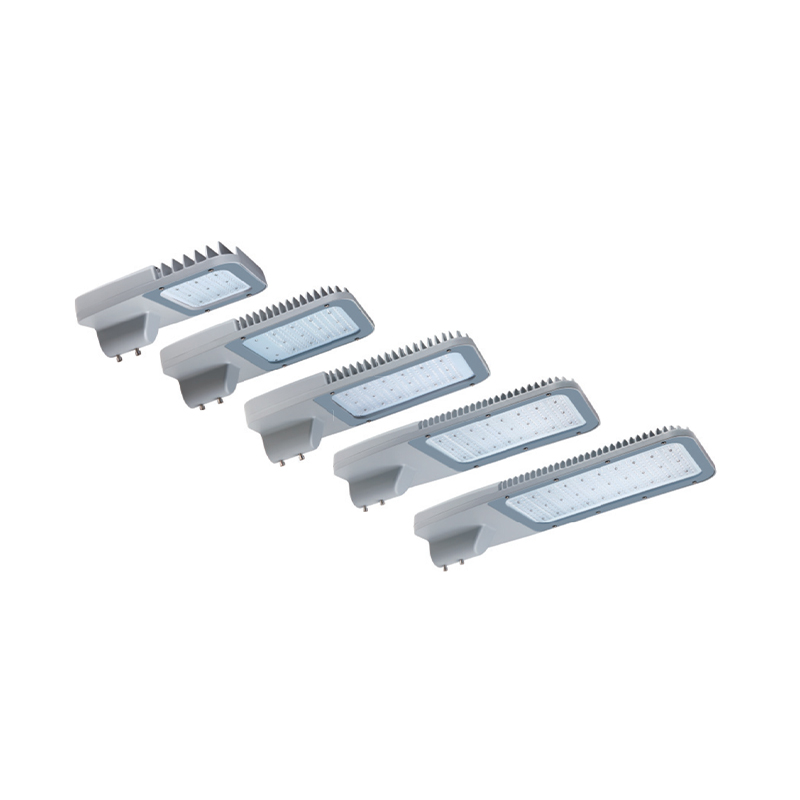 VENUS Series Heavy Duty LED Street Light for 60 to 400 Watt ApplicationsThis heavy-duty fixture covers a wide power range with a uniform, asymmetric optic to reduce glare. Its tool-less maintenance design and durable heat sink support long service life and low total ownership costs for arterial roads.View Product →
Total cost of ownership, not unit price, decides whether an IP66 IK09 LED street light is the right investment. A fixture that survives ten years with stable photometry and one driver change costs less than a cheaper unit replaced twice in the same period.
The survival conversation ends where the design conversation begins: how a fixture shapes the street at night belongs to the wider discipline of efficient city lighting. Protection ratings are the prerequisite, not the whole specification.
IP66 IK09 LED Street Light FAQ
Short answers to the questions buyers ask most often before approving a specification.
Specify IP66 and IK09 together, verify with accredited test reports, then choose efficacy, distribution and wattage based on road class and pole height.
Does an IP66 rating mean the fixture can be submerged?
No. IP66 covers powerful water jets, not immersion. Fixtures that must survive flooding or standing water require IP67 or IP68, which include defined immersion tests.
Is IK10 always better than IK09 for road lighting?
Not automatically. IK10 housing is heavier and more expensive because 20 joules of protection needs thicker walls and stronger lens retention. For typical road exposure, including debris and minor vandalism, IK09 is sufficient. Reserve IK10 for high-risk sites such as ground-level installations and underpasses with frequent deliberate damage.
How do I confirm a supplier actually tests to IP66 and IK09?
Request test reports from an ISO/IEC 17025 accredited laboratory, confirm the model number matches, and check the date of test. Then verify that the production series uses the same gasket material and casting process as the tested sample.
What wattage do most IP66 IK09 LED street light projects specify?
Residential streets commonly use 30 to 60 W, collector roads 100 to 150 W, arterial roads 200 to 300 W, and expressways 300 to 400 W. The protection rating does not determine wattage; road class, pole height and optical distribution do.



 Add.: Jiepai Town, Danyang City, Jiangsu Province, China.
 Tel: +86-0510-86219899
 Phone: +86-18601236320
 Email: