 +86-0510-86219899

 English
 English
 русский
 Español

A recent public lighting tender in southern Europe set 160 lm/W as the minimum acceptable efficacy for new LED street lights, and two of the five bidding manufacturers were disqualified because their photometric files showed 148 lm/W and 152 lm/W at the specified drive current. That is where municipal procurement has landed: 180lm/W LED street light performance is no longer a marketing claim but a measured, verifiable specification. For a 100 W luminaire, 180 lm/W produces 18,000 lumens of real optical output, enough for a two-lane collector road at an 8 m mounting height, and it is changing how buyers compare bids, calculate payback, and justify retrofit programs.
What 180 lm/W Means in Real Street Lighting Terms
Luminous efficacy tells you how many usable lumens you receive for each watt drawn from the grid. The 180 lm/W figure is a luminaire-level measurement: it includes the LED chips, optical lens, driver losses, and thermal effects, so it is always lower than the bare chip efficacy printed on an LED datasheet. A realistic 180 lm/W street light therefore represents a tightly optimized system, not just a high-grade LED.
These lumen packages map directly to road classes: 10,800 lm covers residential streets and cycle paths; 18,000 lm is the working range for collector roads; 27,000 lm and above suits arterials, interchanges, and industrial access roads. Choosing efficacy without a lumen target is meaningless, so always start from the road class and photometric design, then read the required watts from the lm/W curve.
180lm/W LED Street Light vs. Typical Efficiency Levels
Most LED street lights sold today deliver between 130 lm/W and 150 lm/W at the luminaire level. A 180lm/W LED street light is a premium tier, reached only when optical loss, thermal resistance, and driver efficiency are controlled at the same time. The gap is visible in a simple comparison of commonly deployed technologies.
Luminaire-level efficacy by lighting technology
Figure 1: Typical luminaire-level efficacy ranges for common street lighting technologies.
The efficiency gap has direct project consequences. A 130 lm/W fixture producing 21,600 lm needs 166 W, while a 180 lm/W fixture producing the same output needs only 120 W. For a 1,000-fixture network, that is 46 kW of connected load, roughly the reserved capacity of a small distribution transformer and a recurring line item on every utility bill.
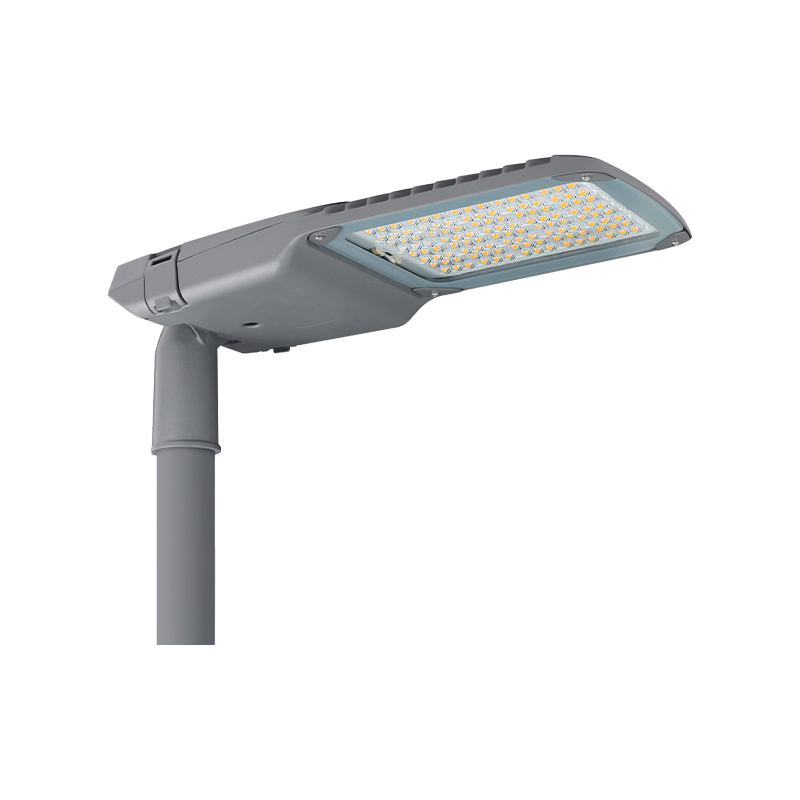
In the current market, the Atlantic Lite series from Jiangsu Dingrui Lighting Technology Co., Ltd. reaches the top of that band. It spans 50 W to 240 W with efficacy from 120 lm/W to 180 lm/W depending on the selected wattage and CCT, which means the same optical family can serve residential streets and main roads.
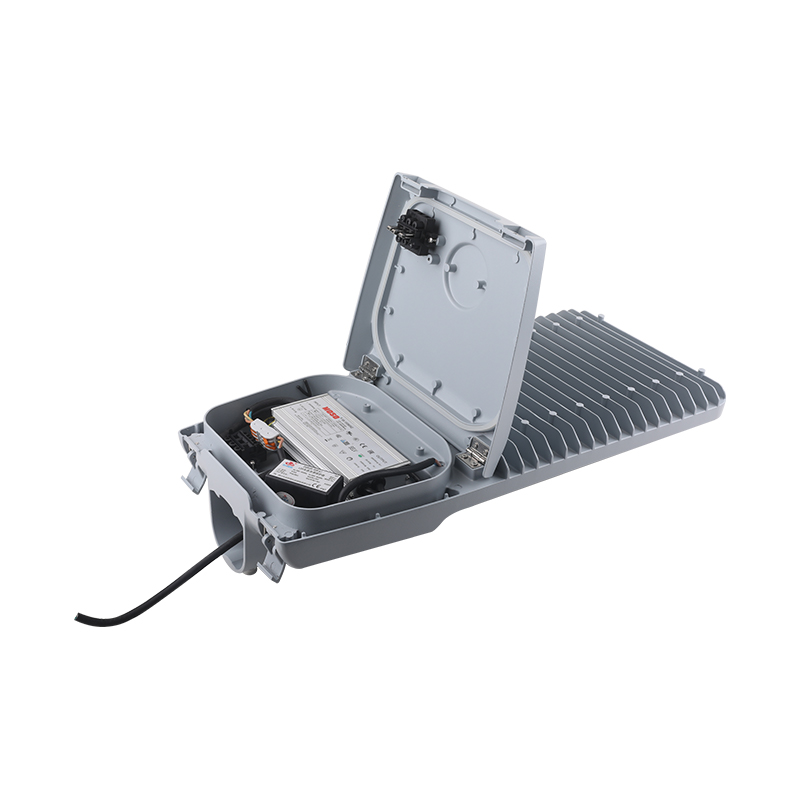 Atlantic Lite LED Street Light with 120-180 lm/W in 50-240 W OptionsThis luminaire family covers residential to main-road applications with a wide efficacy range. Its tool-free gear compartment and asymmetric optical lens are worth reviewing if maintenance cost and glare control matter for your project.View Product →
Buyers who want to understand which metrics actually separate good luminaires from average ones should review our breakdown of key efficiency metrics for urban lighting applications before writing a specification.
Five Components That Make or Break a 180 lm/W Rating
Every supplier can quote a chip-level efficacy number; very few sustain 180 lm/W at the luminaire level, because five components must work together.
- LED chip and binning. 3030 and 5050 SMD chips from established fabs exceed 200 lm/W at low drive current, but the flux bin and grade determine how much of that survives to the luminaire. Tight bins mean consistent output across production batches.
- Optical efficiency. A high-transmittance lens with a Type II or Type III distribution avoids the 10 to 15 percent loss of cheap deep-bowl refractors and keeps light on the road, not the sky.
- Driver efficiency. Constant-current drivers running at 92 to 94 percent efficiency convert almost every input watt into LED power; lower-grade drivers waste 6 to 10 percent as heat.
- Thermal management. A die-cast aluminum housing with a direct thermal path from the MCPCB keeps junction temperature low. A 10 degree C rise can reduce light output by 3 to 5 percent and accelerate lumen depreciation.
- Optical protection. A flat tempered glass cover transmits above 95 percent of the light, while some textured polycarbonate covers fall below 90 percent, quietly erasing the lm/W advantage.
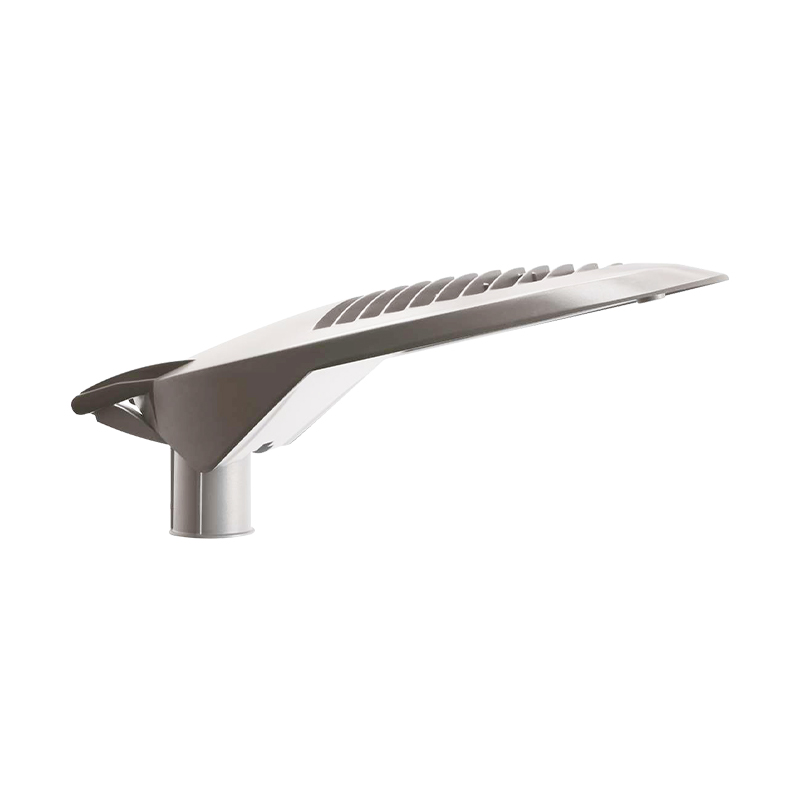
These five factors are why a 180 lm/W LED street light has a recognizable engineering footprint: heavier heatsink, precision lens, and a driver sized for the actual load. The Nova series modular LED street light, rated IP66 and IK10, was designed around that discipline, with replaceable modules that separate the fragile electronics from the heat path.
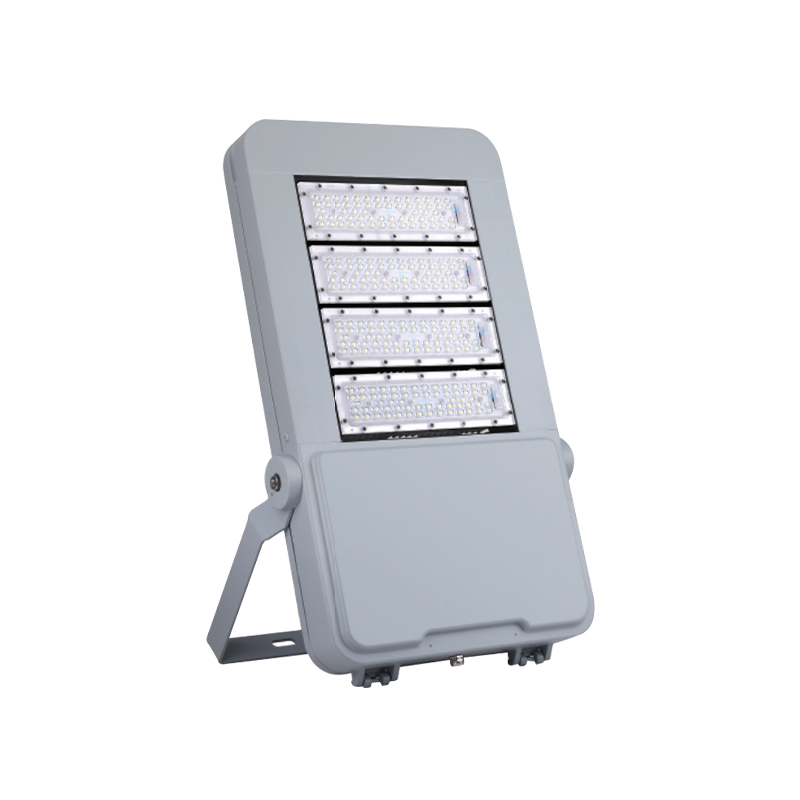 Nova Modular LED Street Light with IP66, IK10, and 30-300 WDesigned for high-efficiency operation, this modular unit separates electronics from the heat path and supports tool-free maintenance. Its replaceable modules and high protection ratings make it relevant when specifying reliable, serviceable street lighting.View Product →
What a 180lm/W LED Street Light Saves in Energy Cost
Take two luminaires producing the same 21,600 lm: one at 150 lm/W draws 144 W, and one at 180 lm/W draws 120 W. That 24 W difference appears small, but multiplied across a municipal network it becomes the largest controllable cost in the lighting budget.
| Efficacy level | Power for 21,600 lm | Annual energy, 4,000 h | Annual cost, $0.12/kWh |
| 110 lm/W (HPS system) | 196 W | 784 kWh | $94.08 |
| 130 lm/W LED | 166 W | 664 kWh | $79.68 |
| 150 lm/W LED | 144 W | 576 kWh | $69.12 |
| 180 lm/W LED | 120 W | 480 kWh | $57.60 |
Each 180 lm/W fixture thus saves $11.52 per year against a 150 lm/W unit at $0.12/kWh. Scale that to a 1,000-fixture residential network, and the annual saving is $11,520; over a 15-year service life it exceeds $170,000, before counting reduced peak demand charges and fewer maintenance interventions.
How to Verify a 180lm/W LED Street Light Claim
An lm/W number is only credible when it is supported by photometric and lifetime documents generated at the operating current and temperature you actually plan to use. Ask the supplier for these before sending a purchase order.
- LM-80 data for the exact LED chip model used in the luminaire.
- TM-21 projected lumen maintenance, with L90 at 100,000 hours or better.
- IES or EULUMDAT photometric file showing luminaire lumens, not chip lumens, at rated watts.
- Integrating sphere test report from the production sample, not a lab prototype.
- Ingress protection of IP66 or higher and impact rating of IK08 to IK10 for roadside exposure.
- Driver specification confirming that the input-power measurement includes driver losses.
For projects that need higher wattage on main roads, verification matters even more because the cost of a wrong decision scales with power. The Atlantic series LED street light covers 100 W to 300 W in an IP66 die-cast aluminum housing, with published photometric files for each wattage and CCT combination.
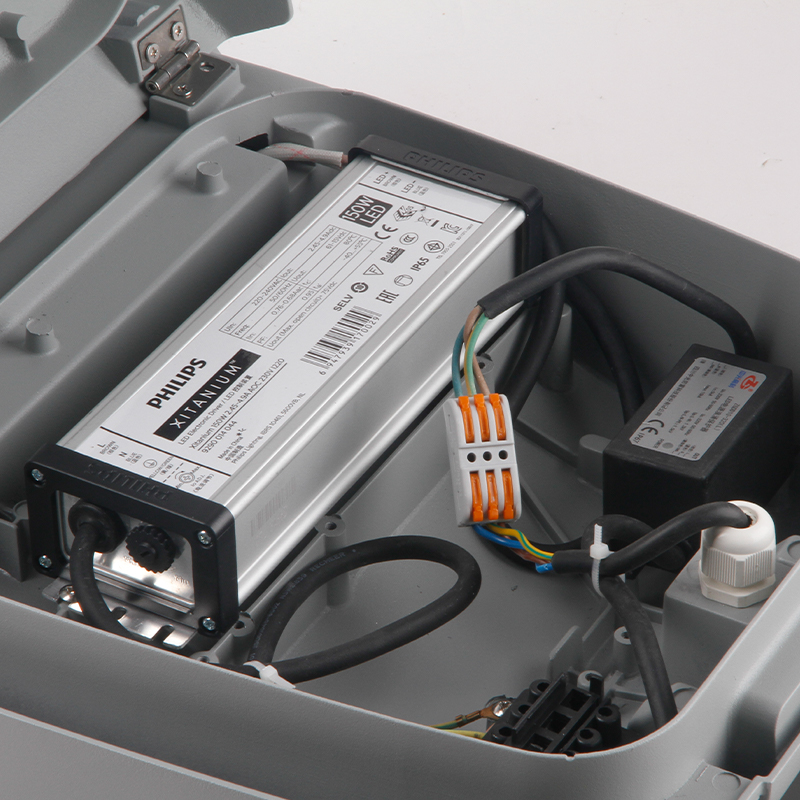 Atlantic High-Power IP66 LED Street Light, 100-300 WFor main-road projects needing higher wattage, this series provides published photometric files and a patented asymmetric lens system. Its modular power compartment and salt-spray-tested housing support long-term performance, which is essential when evaluating how a fixture will behave on site.View Product →
Compare the proposed fixture against the road class, pole spacing, and mounting height of your project. A luminaire that hits 180 lm/W on paper but is fitted with the wrong distribution will still cost you uniformity and glare complaints on site.
Frequently Asked Questions
These are the questions procurement teams actually ask when comparing 180lm/W LED street light bids.
Is higher lm/W always the right choice for street lighting?
Not by itself. Efficacy must be evaluated together with photometric distribution, glare control, uniformity, and dark-sky compliance. A 180 lm/W luminaire with the wrong Type of distribution can underperform a 150 lm/W unit with the correct optic, so define the road class and optical requirement first, then compare efficacy.
How much energy does a 180 lm/W street light save versus 150 lm/W?
For the same lumen output, the saving is proportional to the ratio of efficacies: moving from 150 lm/W to 180 lm/W reduces input power by 16.7 percent. In the common case of a fixture producing 21,600 lm, that is 144 W versus 120 W, or about 96 kWh saved per fixture every year at 4,000 operating hours.
Does 180 lm/W force compromises in color rendering or CCT?
No. High-efficacy street lights routinely run at 3000K to 5000K with CRI 70 to 80, using 3030 or 5050 SMD chips binned for both flux and color. The efficiency comes from optical and thermal design, not from dropping the color quality below road-lighting standards.
What documents should I request before ordering a 180 lm/W LED street light?
Request LM-80 and TM-21 data for the specific LED, an IES photometric file with luminaire lumens, an integrating sphere test report from the production sample, and the declared IP and IK ratings for the model. Ask for a pre-production sample and verify the numbers on the exact driver and current setting specified for your project.



 Add.: Jiepai Town, Danyang City, Jiangsu Province, China.
 Tel: +86-0510-86219899
 Phone: +86-18601236320
 Email: