 +86-0510-86219899

 English
 English
 русский
 Español

Content
- 1 What a Solar Street Light Manufacturer Actually Delivers
- 2 Specifications Worth Scrutinizing Before You Sign
- 3 Certifications and Test Reports to Verify
- 4 A Five-Step Vetting Process for Project Buyers
- 5 Red Flags That Should Stop a Purchase
- 6 Why LED Luminaire Expertise Carries Over to Solar Projects
- 7 Frequently Asked Questions
Two suppliers can quote what looks like the same 60W solar street light, and the prices can differ by a factor of three. Both units will photograph well, and both brochures will promise five nights of autonomy. The gap sits where buyers cannot see it: real battery capacity, actual panel wattage, the grade of the LED chips, and the discipline of the assembly line behind them.
The practical conclusion is simple. For off-grid lighting, the manufacturer's engineering and quality control decide the outcome far more than the numbers on a quotation sheet, because a solar street light is a small standalone power plant with a lamp on top. This guide explains what a capable solar street light manufacturer must get right, which specifications deserve the closest scrutiny, and how to vet a supplier before committing to a municipal or commercial project.
What a Solar Street Light Manufacturer Actually Delivers
It helps to stop thinking of a solar street light as a single product. It is a system of five components that age at different rates, and the manufacturer is accountable for how well they work together:
- Solar panel - converts daylight into charge; monocrystalline cells remain the default where mounting area is limited.
- Battery - stores the energy and is the component most often quietly downgraded in low-cost builds.
- Charge controller - manages charging and discharge limits; a poor controller can shorten battery life or shut lighting off without warning.
- LED luminaire - determines how many usable lumens reach the road per watt drawn from the battery.
- Pole and housing - carries wind load, corrosion protection, and the panel mounting geometry.
When a unit fails in year two, the cause is rarely the LED chip itself. It is usually a battery that was never as large as claimed, a controller that over-discharged the cells, or a housing that let water reach the electronics.
Specifications Worth Scrutinizing Before You Sign
Battery chemistry first
The battery is where cost-cutting does the most damage, so treat chemistry as a non-negotiable line item. Lithium iron phosphate (LiFePO4) has become the standard for quality solar street lighting because it tolerates deep daily cycling and high ambient temperatures better than the alternatives. Ternary lithium cells offer good energy density at a lower price but degrade faster under daily deep discharge. Sealed lead-acid batteries still appear in bids, and their presence usually signals that a supplier is competing on price alone.
| Criterion | LiFePO4 | Ternary lithium | Sealed lead-acid |
|---|---|---|---|
| Typical rated cycle life | Roughly 2,000 cycles or more | About 500 to 800 cycles | About 300 to 500 cycles |
| Heat tolerance | Strongest of the three | Weaker; needs thermal safeguards | Fair; capacity drops in heat |
| Weight and volume | Moderate | Most compact | Heaviest and bulkiest |
| Best fit | Municipal and commercial roads | Acceptable with strict protection settings | Largely outdated for new roads |
Panel input and optical output
Ask for panel wattage in watts rather than a count of solar cells, and ask for luminaire output in lumens with an efficacy figure in lumens per watt. A credible manufacturer will supply photometric files (IES or LDT) for the exact luminaire quoted, not for a generic product family. Efficacy matters even more in solar designs than in grid-powered ones, because every lumen is paid for out of battery capacity; a luminaire at 160 to 180 lm/W stretches the same battery noticeably further than one at 110 lm/W. For a closer look at how these figures shape urban energy budgets, see our breakdown of key efficiency metrics for urban LED street lighting.
Protection ratings and autonomy
Specify IP66 for the luminaire in outdoor service, and request IK impact ratings of IK08 or above where vandalism or traffic spray is plausible. On autonomy, ask for the calculation instead of the promise: panel wattage, nightly consumption under the dimming profile, usable battery capacity, and the number of overcast nights covered. An honest design in most climates covers three to five nights; a quotation claiming seven or more on a small battery deserves laboratory verification before you believe it.
Certifications and Test Reports to Verify
Logos on a website are a starting point, not evidence. CE marking, RoHS compliance, and an ISO 9001 quality system are fair baseline expectations for export-grade street lighting, and buyers in markets with additional safety requirements should confirm those certificates for the luminaire and its driver. What separates careful buyers from frustrated ones is the request that follows: test reports matched to the exact model number on the quotation.
- Ingress protection (IP) and impact (IK) reports for the quoted housing, not a similar one.
- Photometric data confirming lumen output and efficacy at a stated power draw.
- Battery cycle-life documentation from the cell supplier, plus the over-discharge thresholds set in the controller.
- Records of aging tests, in which finished units are powered and monitored before shipment.
A manufacturer that runs multi-stage checks covering optical performance, thermal stability, waterproofing, and life simulation will produce these documents without hesitation. Hesitation is itself a finding.
A Five-Step Vetting Process for Project Buyers
A structured evaluation protects both sides and does not need to take months. This sequence reflects how successful municipal and commercial buyers separate serious factories from trading companies with attractive catalogs.
Define the requirement in engineering terms
Road class, pole height, spacing, target illuminance, dimming profile, and nights of autonomy. A written specification prevents every supplier from solving a different problem.
Match documents to the quotation
Certificates, IP and IK reports, and photometric files should reference the exact model quoted. Confirm the legal entity and whether the factory produces the core components itself.
Audit the factory, onsite or through a third party
Assembly lines, battery storage conditions, aging-test racks, and calibration equipment reveal more in an afternoon than a week of email.
Test samples like a laboratory, not a showroom
Discharge-test the battery to verify capacity, check luminous flux against the datasheet, and run a water-spray check on the seals before approving a pilot batch.
Run a pilot season, then scale with terms in writing
Install a small batch through one full rainy season, review the failure data, and lock warranty terms, spare-part availability, and battery replacement pricing into the supply agreement before the volume order.
Red Flags That Should Stop a Purchase
Most problematic solar street light deals show warning signs early, and the patterns below account for the majority of failures we see when buyers re-tender a project that went wrong.
- Price below the component math. If the quote cannot cover a genuine LiFePO4 pack and a correctly sized panel, one of them is not inside the box.
- Battery capacity in mAh without voltage. Claims that avoid watt-hours make comparison impossible, and usually hide it.
- Generic photometric files. An IES file that does not correspond to the quoted luminaire means the lighting design is fiction.
- A vague battery warranty. A five-year whole-unit warranty that never names battery replacement terms expires the first time the battery does.
- No engineering dialogue. A supplier who accepts any specification without questioning autonomy, pole height, or local sunlight conditions is quoting, not engineering.
None of these signs is fatal on its own, but two or more together justify walking away or demanding third-party verification at the supplier's cost.
Why LED Luminaire Expertise Carries Over to Solar Projects
The luminaire is the part of a solar street light that buyers actually see at night, and it is the component with the longest service life. This is where an established LED street light manufacturer adds the most value to an off-grid project: optical distribution that puts light on the roadway instead of the sky, heat sinking that protects the chips for tens of thousands of hours, and sealing that survives years of rain and temperature swings.
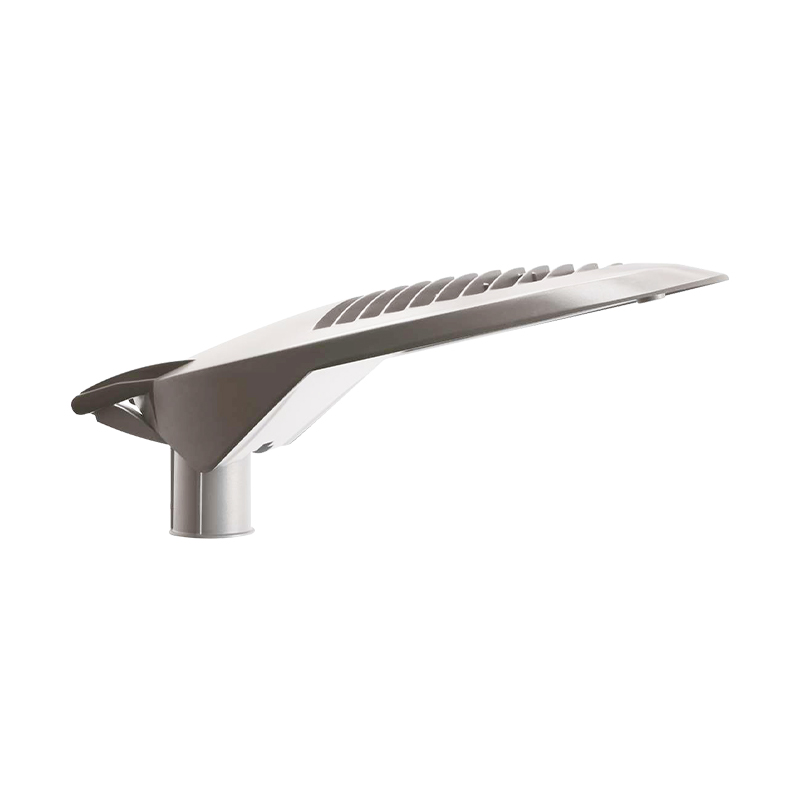
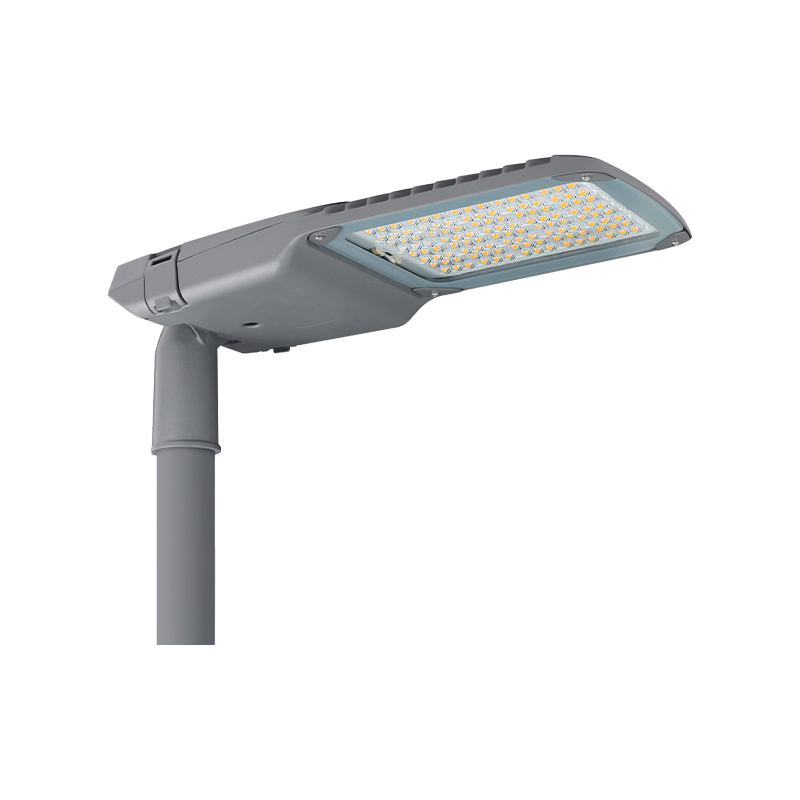
Efficacy is the clearest example. Because a solar system pays for every lumen out of stored energy, luminaires in the 120 to 180 lm/W class directly extend nightly runtime or reduce the battery a design requires. A fitting reference point from our own street light program:
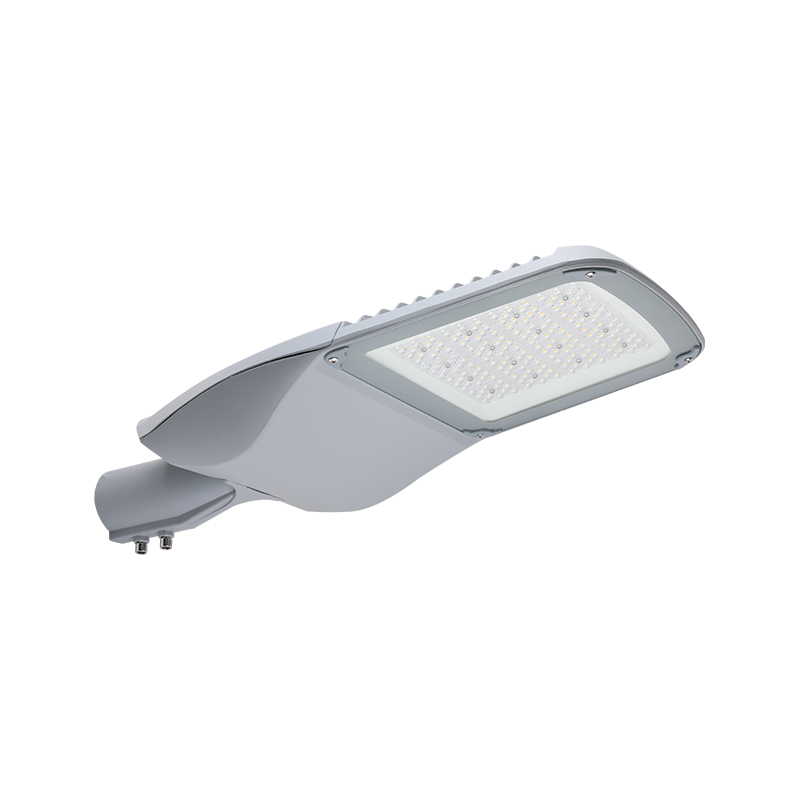
Atlantic Lite series LED street lights, offering 120-180 lm/W efficacy across 50W to 200W configurations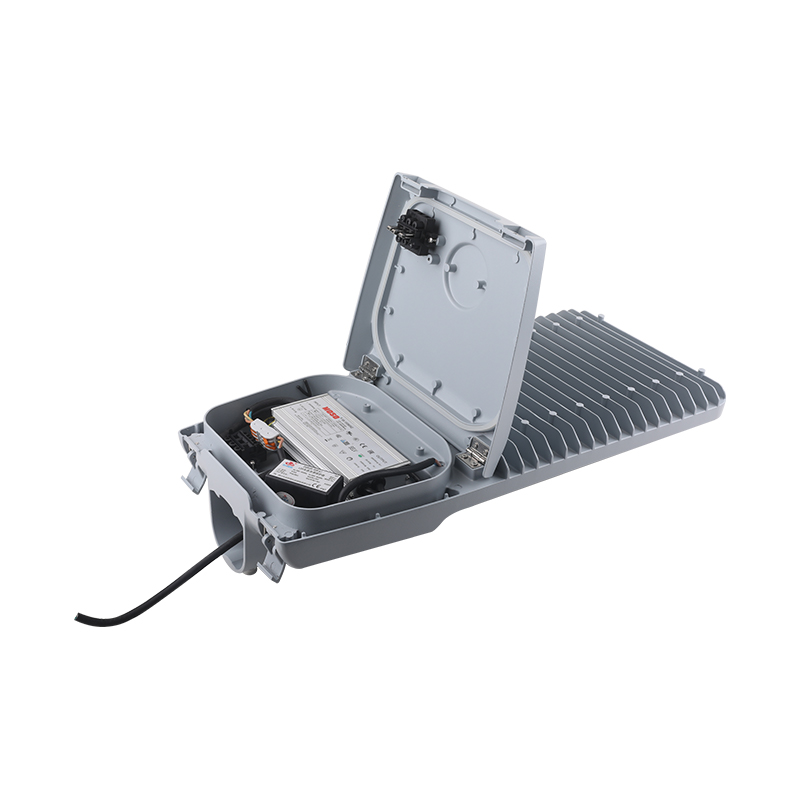 120-180 lm/W ATLANTIC LITE LED Street Light (50W-200W)With 120-180 lm/W efficacy, this street light stretches nightly runtime or reduces battery sizing in solar designs. Tool-free maintenance, optical lenses for low glare, and a die-cast aluminum body make it a solid reference for road lighting.View Product →
Durability and serviceability matter just as much in remote installations, where a single service visit can cost more than the fixture. Modular construction keeps repairs local, since a light engine or driver can be replaced without removing the entire unit, while high ingress and impact ratings keep water and vandalism out. The construction standard worth specifying for solar and grid-powered roads alike looks like this:
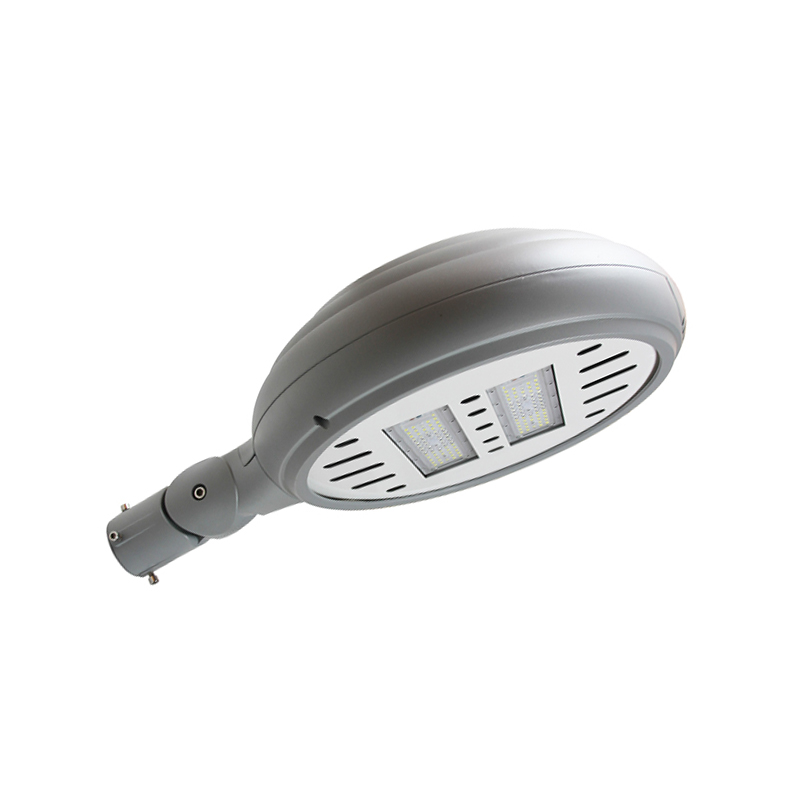
Nova series modular LED street lights, rated IP66 and IK10 across a 30W to 300W range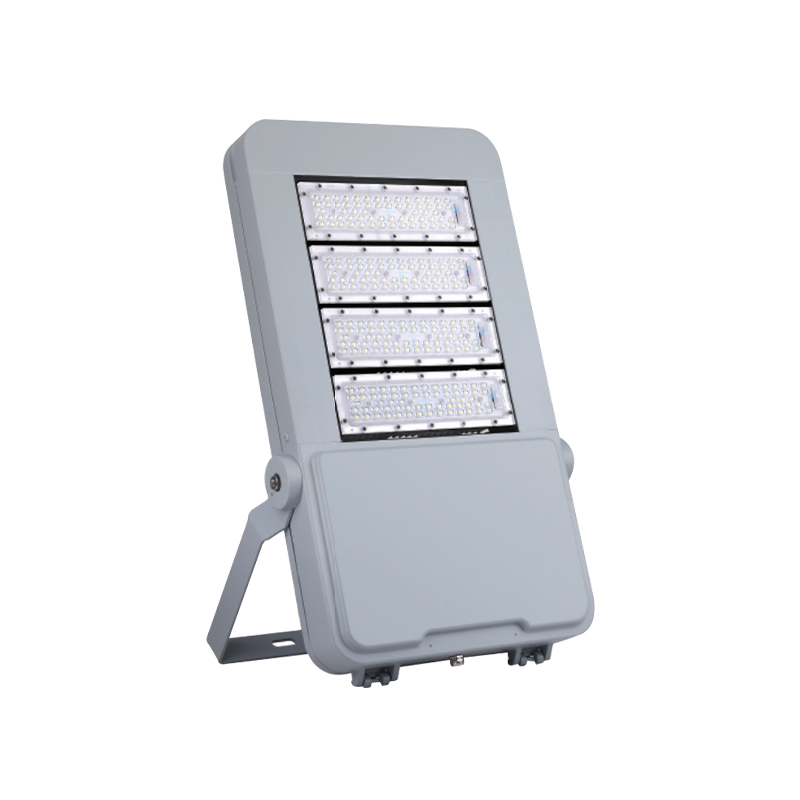 NOVA Series Modular LED Street Light, 30W-300W, IP66 IK10Remote installations favor fixtures that can be serviced on site. NOVA's tool-free gear compartment and modular 1-6 module LED engine allow local repair, while IP66 and IK10 ratings resist water and vandalism on solar or grid-powered roads.View Product →
Whether a project needs a complete off-grid system or an LED luminaire engineered to pair with a separately sourced solar kit, the evaluation logic stays the same. Verify the photometry, the sealing, and the testing behind the datasheet, and work with a manufacturer that treats the light engine as precision equipment rather than a commodity.
Frequently Asked Questions
How long does a solar street light actually last?
The LED luminaire commonly reaches 50,000 hours or more of rated life. The battery is the first component to need replacement; LiFePO4 packs in daily-cycling service typically serve around five years, while the panel degrades slowly over decades. Plan battery replacement into the maintenance budget from day one.
Which battery chemistry should a municipal tender require?
LiFePO4 is the sensible default for daily deep cycling, particularly in hot climates. Write watt-hour capacity and cycle-life documentation into the tender so bidders cannot substitute unspecified cells.
Can the LED luminaire and the solar power kit be sourced separately?
Yes, and many project buyers do exactly that, pairing a qualified luminaire with a separately qualified solar kit. Agree system voltage, controller parameters, and connector standards before production so the parts integrate without rework.
What project size justifies buying directly from a manufacturer?
From roughly fifty units upward, a direct manufacturing relationship usually pays off through customization of pole interfaces, dimming profiles, and optics, together with better unit pricing. Below that volume, a stocking distributor may serve the project faster.


 Add.: Jiepai Town, Danyang City, Jiangsu Province, China.
 Tel: +86-0510-86219899
 Phone: +86-18601236320
 Email: