 +86-0510-86219899

 English
 English
 русский
 Español

LED street light fixtures represent the ultimate solution for modern urban and highway illumination. They are not merely an incremental upgrade but a fundamental shift in lighting technology. By transitioning to LED technology, municipalities and private entities can expect an immediate reduction in energy consumption by up to 60-70%, a drastic decrease in maintenance cycles, and a significant improvement in public safety due to superior light quality. Their directional nature and controllability make them the only logical choice for new installations and retrofits aimed at sustainability and cost-efficiency.
The core advantage lies in their ability to produce high-lumen output with minimal wattage while maintaining excellent thermal management. Unlike traditional High-Pressure Sodium (HPS) or Metal Halide (MH) lamps, LED fixtures do not rely on fragile filaments or harmful gases, resulting in lifespans that often exceed 50,000 to 100,000 hours. This translates to over a decade of reliable service with minimal degradation in light output.
Core Advantages of Modern LED Street Lighting
The transition to LED street light fixtures is driven by several compounding benefits that affect both the bottom line and the quality of public spaces.
Unmatched Energy Efficiency
Traditional street lighting wastes a significant portion of its energy as heat. LEDs convert almost 95% of their energy into light. This efficiency means that a 100-watt LED fixture can often replace a 250-watt HPS fixture, delivering equal or better brightness on the ground. This reduction directly lowers carbon footprints and utility expenses.
Enhanced Visibility and Safety
Color Rendering Index (CRI) is crucial for street lighting. LEDs typically offer a CRI of 70 or higher, compared to the 20-30 range of HPS lights. This allows drivers and pedestrians to accurately distinguish colors, recognize faces, and identify obstacles much faster, drastically reducing reaction times and accident rates.
Critical Components of LED Street Light Fixtures
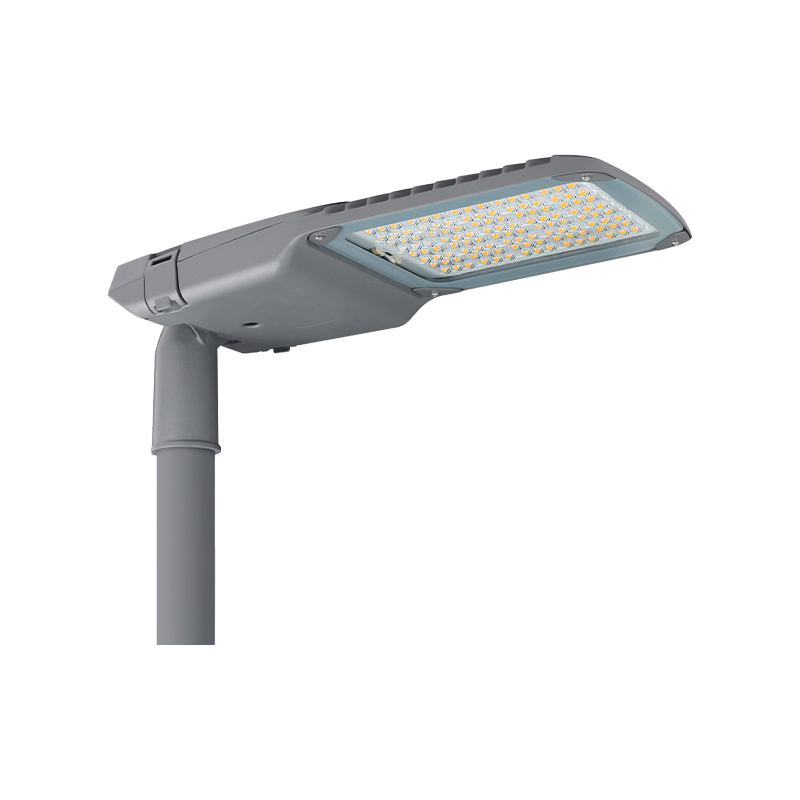
Understanding the anatomy of an LED street light fixture is essential for evaluating quality and performance. The durability of the fixture depends on the synergy of its internal parts.
- LED Chips: The primary light source. High-quality chips ensure consistent lumen output and color stability over time. The arrangement of these chips dictates the beam angle.
- LED Driver: The power supply that converts AC line voltage to DC current. A reliable driver with a high power factor (>0.95) ensures stable performance and protects the chips from voltage fluctuations.
- Thermal Management System (Heat Sink): Heat is the primary enemy of LED longevity. Aluminum heat sinks with fin designs are critical for dissipating heat away from the chips, preventing lumen depreciation.
- Optical Lenses: Unlike traditional reflectors, LEDs use precision-engineered lenses to direct light exactly where it is needed. This minimizes light trespass into homes and reduces sky glow.
Practical Guide to Selecting the Right Fixture
Choosing the correct LED street light fixture requires analyzing the specific application. A residential cul-de-sac has different requirements than a six-lane highway intersection.
Determining Luminous Flux (Lumens)
Do not select based on wattage. Instead, calculate the required lumens based on road width, mounting height, and local illumination standards. For instance, a local road might require 6,000 to 9,000 lumens, while a major arterial road may need 15,000 to 25,000 lumens.
Color Temperature (CCT) Selection
Correlated Color Temperature affects visibility and human circadian rhythms.
- 3000K (Warm White): Preferred for residential areas to minimize disturbance and create a welcoming atmosphere.
- 4000K (Neutral White): A balanced choice for urban centers and commercial districts, offering high visibility without excessive glare.
- 5000K+ (Daylight): Often used for highways and high-security areas where maximum contrast and alertness are required.
Ingress Protection (IP) Rating
Street lights must withstand harsh weather. An IP66 rating or higher is mandatory. IP66 guarantees protection against powerful water jets and dust ingress, ensuring the internal electronics remain dry during heavy storms and humid conditions.
Comparative Analysis: LED vs. Traditional Lighting
The superiority of LED street light fixtures becomes evident when directly compared to legacy lighting systems like High-Pressure Sodium (HPS) and Metal Halide (MH).
| Feature | LED Street Light | HPS Light |
|---|---|---|
| Lifespan | 50,000 - 100,000 hours | 10,000 - 15,000 hours |
| Efficacy | 130 - 200 lm/W | 80 - 100 lm/W |
| CRI | 70 - 90 | 20 - 30 |
| Warm-up Time | Instant On | Several minutes |
| Mercury Content | None | Contains Mercury |
Installation and Maintenance Best Practices
While LED fixtures are inherently low-maintenance, proper installation is crucial to maximizing their lifespan and performance.
- Structural Integrity: Ensure the light pole and bracket can support the weight and wind load (EPA) of the new fixture. While LEDs are generally lighter than HPS lights, verifying compatibility prevents structural failure.
- Aiming and Distribution: Use the fixture's adjustable slip fitter to aim the light correctly. Misaligned fixtures cause glare for oncoming traffic and leave dark spots on the road.
- Electrical Safety: Always disconnect power before installation. Ensure all wire connections are sealed with waterproof connectors to prevent short circuits, even if the fixture itself is IP66 rated.
- Periodic Inspection: Although relamping is rarely needed, schedule annual visual inspections to clean the lens of debris and check for any physical damage from vehicle impacts or severe weather.


 Add.: Jiepai Town, Danyang City, Jiangsu Province, China.
 Tel: +86-0510-86219899
 Phone: +86-18601236320
 Email: