 +86-0510-86219899

 English
 English
 русский
 Español

Content
- 1 Why LED is the Superior Choice
- 2 Unmatched Energy Efficiency and Cost Performance
- 3 Dramatic Reduction in Maintenance Requirements
- 4 Comparative Overview: LED vs. Traditional Technologies
- 5 Enhancing Public Safety and Visibility
- 6 The Role of Smart Controls and Future-Proofing
- 7 Environmental Responsibility and Light Pollution
- 8 Heat Management and Cold Weather Performance
- 9 Summary of Strategic Value
Why LED is the Superior Choice
After evaluating performance, cost, and environmental impact, the conclusion is undeniable: LED street lights represent the pinnacle of outdoor lighting technology. They are not merely an incremental upgrade over previous technologies like High Pressure Sodium (HPS) or Metal Halide lamps; they are a fundamental shift in how we illuminate our roads. For any municipal planner, developer, or infrastructure manager, the question is no longer "if" one should switch, but "how soon" the transition can be completed. The combination of massive energy savings, drastically reduced maintenance requirements, and superior optical performance makes LED technology the only logical choice for modern infrastructure projects.
Unmatched Energy Efficiency and Cost Performance
The primary driver for the global adoption of LED street lighting is energy efficiency. Traditional lighting technologies, such as incandescent or sodium vapor lamps, operate on the principle of heating a filament or exciting a gas to produce light. This process generates a significant amount of waste heat, sometimes converting less than a quarter of the consumed energy into visible light. In contrast, LED (Light Emitting Diode) technology uses electroluminescence, a process that generates light with remarkably little heat.
This difference in physics translates directly to practical benefits. An LED street light fixture typically consumes 40% to 60% less energy than its traditional counterparts while delivering the same or better illumination levels. For municipalities spending millions on electricity for public lighting, this reduction is transformative. The savings are not theoretical; they are measurable immediately upon installation.
Key Insight: Because LEDs are directional, they can place light exactly where it is needed. Traditional lamps often scatter light in all directions, requiring reflectors that trap some of the output. This inherent directionality means an LED fixture can achieve the same road surface brightness with significantly lower wattage.
Dramatic Reduction in Maintenance Requirements
Beyond the monthly electric bill, the "hidden" cost of street lighting is maintenance. Replacing a single lamp on a high mast or a distant highway fixture is not a simple task. It involves dispatching a crew with a bucket truck or lift, blocking traffic lanes for safety, and consuming fuel and man-hours. For older technologies, this cycle repeats every few years as lamps degrade and fail.
LED street lights fundamentally alter this equation. The solid-state design of an LED fixture is robust; it has no fragile filaments to break or glass envelopes to shatter. The operational life of a high-quality LED street light is often rated at 50,000 to 100,000 hours. In real-world terms, this means a fixture can operate for nearly two decades without requiring a lamp change. This longevity virtually eliminates the recurring labor costs associated with street lighting maintenance. The "install and forget" nature of these fixtures allows maintenance teams to redirect their efforts toward other critical infrastructure needs.
Comparative Overview: LED vs. Traditional Technologies
Understanding the technical superiority of LED fixtures requires a direct comparison with the technologies they are replacing. While High Pressure Sodium (HPS) lamps have been the standard for decades, they fall short in several critical metrics. The table below illustrates the stark differences in performance characteristics.
| Feature | LED Street Light | High Pressure Sodium |
|---|---|---|
| Energy Consumption | Very Low | High |
| Lifespan | 15+ Years | 3-5 Years |
| Color Rendering | Excellent (Natural White) | Poor (Yellow/Orange Tint) |
| Light Distribution | Directional & Controlled | Omnidirectional (Waste) |
| Warm-up Time | Instant On | Slow (Minutes) |
Enhancing Public Safety and Visibility
The economic arguments for LED street lights are compelling, but the social impact on safety is equally vital. Street lighting is primarily a safety tool intended to reduce accidents and crime. Traditional sodium lamps produce a monochromatic yellowish light that makes color recognition difficult. Under this light, a red car looks brown, and a green shirt looks grey. This lack of color distinction makes it harder for witnesses to identify vehicles or for drivers to distinguish objects on the road.
LED street lights, particularly those in the cooler white spectrum (often 4000K to 5000K), provide high Color Rendering Index (CRI) values. This allows the human eye to perceive colors naturally, just as they would appear under daylight. Improved visibility improves reaction times. Drivers can see pedestrians, animals, or obstacles much sooner. For pedestrians, a well-lit street with accurate color rendering creates a sense of security and reduces the fear of crime, as potential hazards are more easily identified.
- Better peripheral vision for drivers at night.
- Clearer identification of signage and road markings.
- Reduction of the "gray-out" effect common with low-CRI lighting.
The Role of Smart Controls and Future-Proofing
A LED street light is not just a source of illumination; it is a digital node in a smart city network. Unlike traditional lamps which are simple "dumb" devices, LED fixtures are electronic devices compatible with advanced control systems. This compatibility opens the door to "Smart Street Lighting" systems that leverage the Internet of Things (IoT).
Adaptive Lighting Scenarios
Through the integration of sensors and wireless communication, a grid of LED street lights can adapt to real-time conditions. For example, on a highway, lights can operate at a lower brightness when traffic is light and instantly ramp up to full brightness when a vehicle approaches. This feature, known as adaptive dimming, saves even more energy during off-peak hours without compromising safety when it matters.
Furthermore, the infrastructure can be used for more than light. The poles housing LED lights can be equipped with environmental sensors to monitor air quality, noise levels, or even detect gunshots in urban areas, sending data back to a central management system. This transforms the street light from a passive utility into an active participant in city management.
Environmental Responsibility and Light Pollution
The global push for sustainability favors LED technology for several reasons. First, the reduced energy consumption directly lowers the carbon footprint of a city's lighting grid. Second, LED fixtures do not contain hazardous materials like mercury, which is found in some older lighting technologies. This makes disposal safer and easier at the end of the product's life.
However, the impact on light pollution is a nuanced topic. While the directional nature of LEDs prevents light from spilling upward into the sky (sky glow), the high intensity and blue-light content of some early LEDs raised concerns about ecological impact. Modern designs address this by utilizing "warm white" color temperatures and precise optics to minimize light trespass into homes or natural habitats. When properly specified, LED street lights offer a superior solution for dark-sky compliance compared to the scatter-prone designs of older cobra-head fixtures.
Ecological Benefits
No mercury or hazardous gas content, fully recyclable components.
Carbon Reduction
Significant lowering of CO2 emissions due to lower power plant demand.
Heat Management and Cold Weather Performance
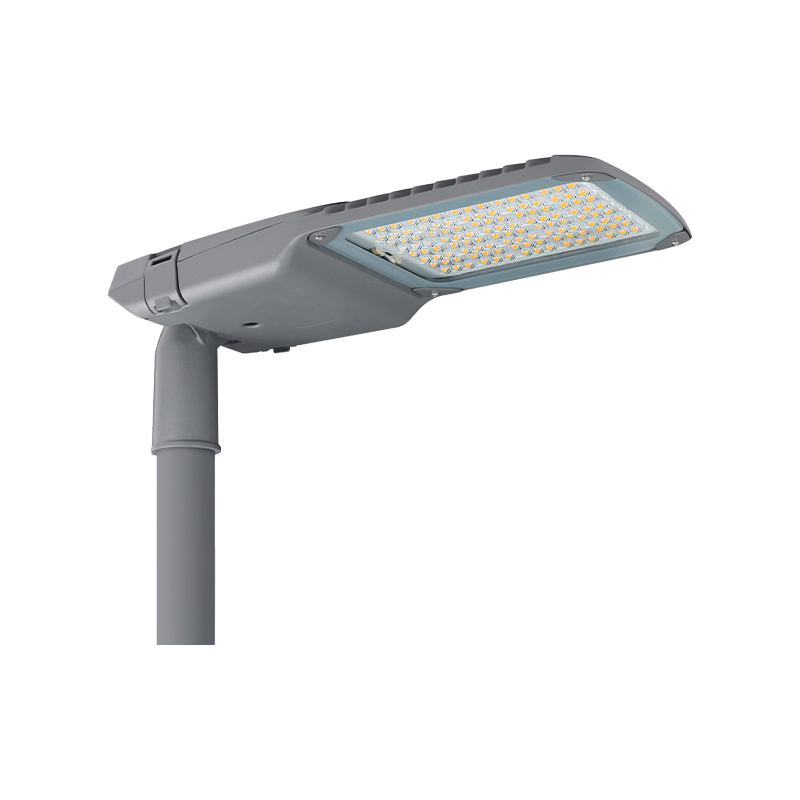
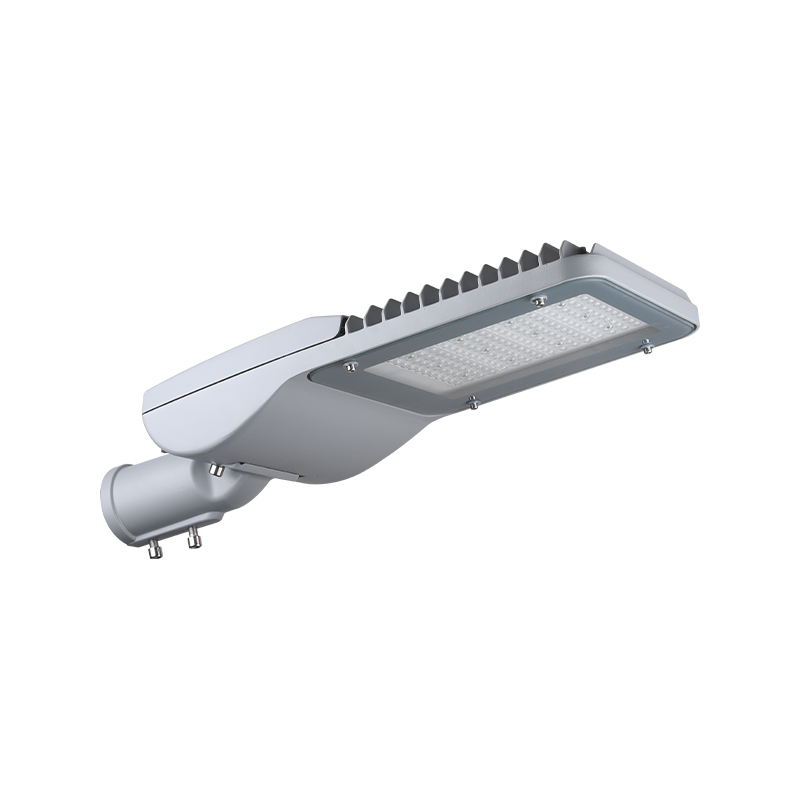
A common misconception is that LED lights do not produce heat. While they are cool to the touch compared to a hot filament, they generate heat at the semiconductor junction. This heat must be managed. Therefore, a high-quality LED street light is engineered with sophisticated heat sinks (usually aluminum fins) to dissipate thermal energy. This ensures the light does not overheat and degrade prematurely.
Interestingly, this thermal characteristic gives LEDs a massive advantage in cold climates. Traditional lamps, especially fluorescent types, can struggle to ignite or may flicker in sub-freezing temperatures. In contrast, LEDs operate more efficiently in cold weather. The cooler the ambient temperature, the better the heat dissipation, leading to slightly higher light output and longer life. This makes them ideal for northern regions or high-altitude installations where winter nights are long and dark.
Summary of Strategic Value
The transition to LED street lighting is a strategic investment that pays dividends across multiple sectors. It is an economic engine, driving down the operational costs of cities. It is a safety tool, providing clearer and more natural light to protect citizens. It is an environmental shield, reducing energy waste and avoiding toxic materials. As the technology matures, the focus is shifting from simply "saving energy" to "enabling connectivity." The LED street light of today is a platform for the smart cities of tomorrow. For any region looking to modernize, LED technology is not just an option; it is the foundation of a brighter, safer, and more efficient future.


 Add.: Jiepai Town, Danyang City, Jiangsu Province, China.
 Tel: +86-0510-86219899
 Phone: +86-18601236320
 Email: