 +86-0510-86219899

 English
 English
 русский
 Español

Picture a 12-meter-high distribution hall where thirty 400 W metal halide fixtures run about 4,000 hours each year. Between lamp replacements, lift-truck time spent relamping, and the energy bill, every fixture quietly adds thousands of dollars to operating cost. The fastest correction is almost always the same one: switch to LED high bay lights.
The conclusion is arithmetic, not preference. A quality LED high bay light delivers equal or better illuminance at roughly half the input power, with a rated lifetime that outlasts several generations of discharge lamps. This guide explains what high bay lighting is, which specifications matter when you compare fixtures, how to plan a retrofit, and what to verify before you place an order.
What Is a LED High Bay Light and When Do You Need One?
A LED high bay light is a luminaire designed for ceilings at or above roughly 6 meters (20 feet). The term "high bay" describes the interior space the fixture serves: large rooms with tall ceilings where light must travel a long way before it reaches the floor.
Typical applications include warehouses and logistics centers, manufacturing floors, gymnasiums, aircraft hangars, wholesale retail stores, and cold-storage facilities. A fixture that works well at 6 meters may perform poorly at 15 meters, so the first question is always the same: at what height will the luminaire be mounted, and what task takes place beneath it?
Low bay fixtures are generally used below roughly 4.5 to 5 meters. The zone in between is a judgment call based on the photometric distribution and the required illuminance rather than a strict height rule.
LED High Bay Light Buying Guide: Specifications That Matter
Wattage, Lumens, and System Efficacy
The wattage printed on the box tells you very little on its own. What matters is system efficacy, measured in lumens per watt. As a planning reference, the following ranges are typical for modern LED high bay fixtures.
| Mounting height | Typical wattage | Typical lumen package | Common application |
|---|---|---|---|
| 6-8 m (20-26 ft) | 100 W | 13,000-15,000 lm | Small workshops, storage rooms, mezzanines |
| 8-12 m (26-40 ft) | 150 W | 19,000-22,500 lm | Warehouses, assembly lines, stockrooms |
| 12-15 m (40-50 ft) | 200 W | 26,000-28,000 lm | Logistics centers, gymnasiums, hangars |
The same principle that guides efficiency metrics for LED street lighting applies indoors: compare measured lumens per watt and photometric distribution, not wattage alone. For 100-200 W classes that cover most medium and high bay spaces, the Mira series LED high bay light is a practical starting point, with models at 100 W, 150 W, and 200 W.
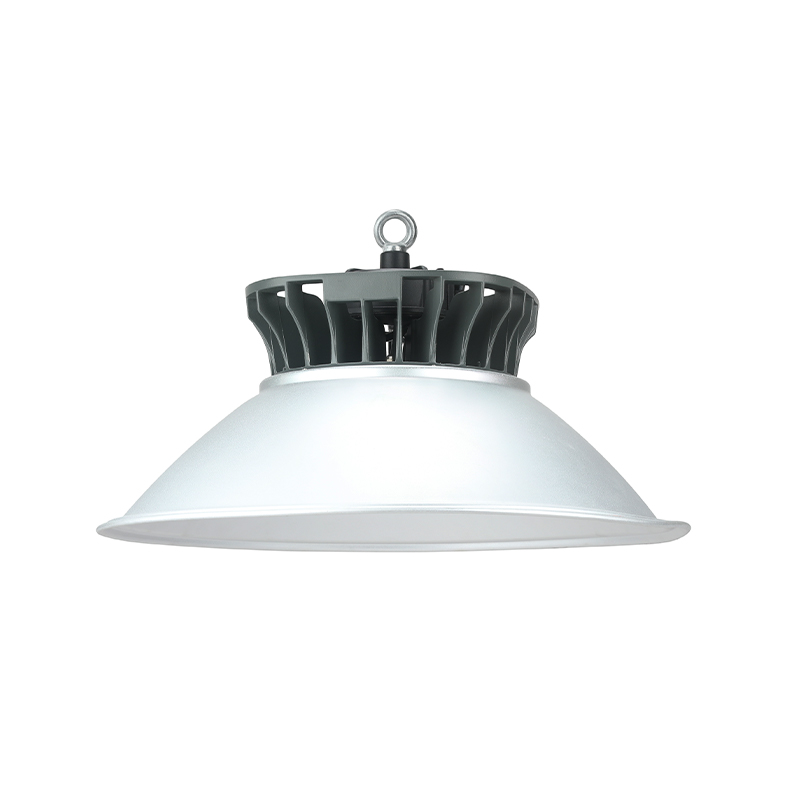 Custom 100w 150w 200w MIRA Series LED Highbay Light Manufacturer, FactoryJiangsu Dingrui Lighting Technology Co., Ltd. is a China Custom 100w 150w 200w MIRA Series LED Highbay Light Manufacturer and OEM/ODM Fac...View Product →
Beam Angle and Light Distribution
Beam angle determines how far the light reaches and how evenly it spreads. Wide beams around 90 to 120 degrees suit lower ceilings and open floor layouts, while narrower 60 to 90 degree beams work better in tall racking aisles, where light must be directed downward rather than wasted on the rack structure. If operators perform visual tasks below the luminaire, check the glare rating and uniformity in the photometric file.
Mounting and Configuration
High bay fixtures are installed by hook-and-eye, pendant rod, or a bracket kit attached to the ceiling structure. Verify that the housing provides solid suspension points and that the accessories match the beam or truss layout. The Toro series LED high bay light, for example, is built around a suspension mounting accessory kit, which simplifies installation on steel beams and trusses.
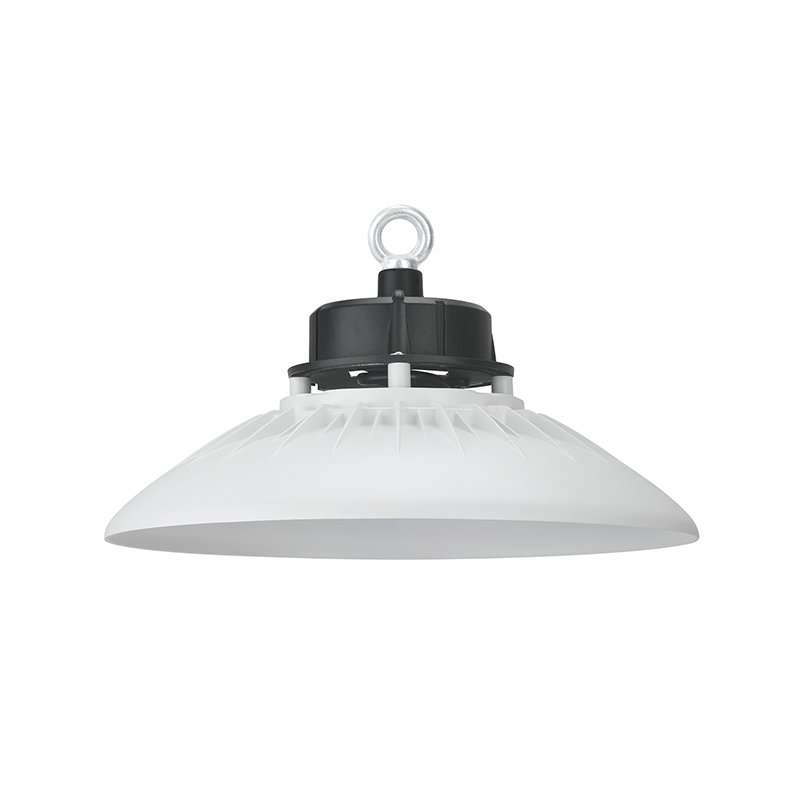 Custom Suspension Mounting Accessories Design TORO Series LED Highbay Light ManuJiangsu Dingrui Lighting Technology Co., Ltd. is a China Custom Suspension Mounting Accessories Design TORO Series LED Highbay Light Manu...View Product →
Housing, IP Rating, and Thermal Design
LED chips and drivers are temperature-sensitive, so the housing has to work as a heat sink. Die-cast aluminum bodies with adequate fin area keep junction temperatures within safe limits and protect lumen maintenance over time. For most dry industrial interiors, an IP65 rating is sufficient and dust-tight; wash-down areas and spaces with high humidity justify a higher rating. In forklift-heavy environments, also confirm the IK impact rating so the diffuser survives accidental contact.
How to Plan a High Bay Retrofit in Five Steps
A retrofit succeeds or fails during planning. Walk the building with this checklist before you compare prices.
- Measure the mounting height and floor area of each bay, and record the number, wattage, and beam angle of the existing fixtures.
- Define the target illuminance: roughly 200-300 lux for general warehousing and circulation, and 500 lux or more for inspection and fine assembly tasks. Confirm the value against local standards.
- Select beam angle and spacing from the photometric data so that overlapping light is limited to the areas that actually need it.
- Choose the wattage and lumen class from the table above, then check the lumen maintenance value (L80 or L70) at the rated lifetime.
- Verify the electrical conditions: input voltage range, surge protection, ambient temperature, and the mounting method such as hook, rod, or suspension kit.
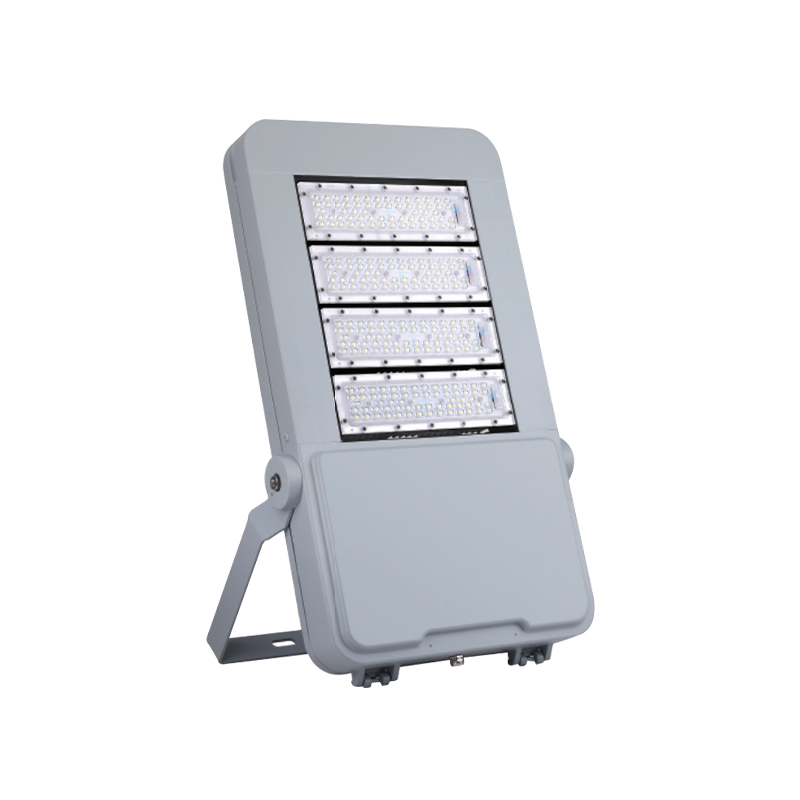
If the building combines high bay areas with outdoor loading zones, plan both together so that the procurement and control strategy stays consistent across the site.
Total Cost of Ownership: Why Efficiency Wins
The business case for LED high bays becomes clear when you compare lifetime cost instead of unit price. The table below shows an indicative comparison between a typical 400 W metal halide system and a 150 W LED high bay fixture operating 4,000 hours per year.
| Parameter | 400 W metal halide | 150 W LED high bay |
|---|---|---|
| Input power | About 400 W | About 150 W |
| Annual energy per fixture | About 1,600 kWh | About 600 kWh |
| Rated lifetime | Typical 12,000-20,000 h | Typical 50,000 h (L70/L80 by model) |
| Relamping and maintenance | Frequent | Rare |
On a 30-fixture site, the energy gap alone is roughly 30,000 kWh per year. Add lamps, lift rental, and labor for relamping, and the payback period usually lands in the 1.5 to 3 year range depending on local tariffs. This is the same logic that makes energy-saving LED flood lights a key solution for exterior areas. Standardizing on LED across the whole facility simplifies spare parts, controls, and service.
What to Verify When You Buy from a Manufacturer
The specification sheet is only half the story. Supplier quality decides whether the published numbers survive in production.
- Certifications and reports: ask for CE, RoHS, and ISO9001 documentation, plus test reports covering optical performance, thermal stability, waterproofing, and lifetime simulation.
- Batch consistency: check how the manufacturer controls LED chip binning, driver supply, and assembly so that the last unit in an order matches the first.
- Customization: many projects need a specific lumen package, beam angle, or mounting accessory rather than a standard catalog item, so confirm the options available before you commit.
- Warranty and support: clarify the warranty period, the response process for defective units, and whether the supplier stocks spare drivers and optics.
Dingrui Lighting, for example, has produced commercial and industrial lighting for over 15 years, operates a 20,000 square meter facility with more than 200 employees, and exports to over 35 countries. That scale supports consistent batch production and engineering support for projects that need custom configurations.
LED High Bay Light FAQ
What is the difference between high bay and low bay lighting?
High bay fixtures are designed for ceilings above roughly 6 meters and deliver a large lumen package over a long distance. Low bay fixtures suit ceilings below 4.5-5 meters. In between, the choice depends on the photometric distribution and the target illuminance rather than a strict height cutoff.
How many lumens do I need for a warehouse?
It depends on the target illuminance, mounting height, and room geometry. As a planning shortcut, a 100 W fixture with 13,000-15,000 lm covers most 6-8 m spaces, 150 W with 19,000-22,500 lm covers 8-12 m spaces, and 200 W with 26,000-28,000 lm covers 12-15 m spaces. Always ask the supplier for a photometric layout of your actual room.
Can a 150 W LED high bay replace a 400 W metal halide?
In most cases, yes. A quality LED fixture delivers comparable or better lumen output with a controlled beam and improved uniformity at less than half the input power. Check the specific lumen package and photometric file for your mounting height before you replace.
What IP rating do high bay lights need?
For dry indoor industrial spaces, IP65 is adequate and dust-tight. For wash-down areas or installations near building openings, choose a higher rating. If forklifts operate nearby, also verify the IK impact rating of the diffuser and housing.


 Add.: Jiepai Town, Danyang City, Jiangsu Province, China.
 Tel: +86-0510-86219899
 Phone: +86-18601236320
 Email: